By Peter, Master Electrician | PRO Electric plus HVAC | Electrical Panel Upgrades
BOTTOM LINE UP FRONT (BLUF)
In older homes throughout Prince William County, from Dumfries and Occoquan to historic areas near Rippon Lodge and Bel Air Plantation, antique electrical systems don’t just feel outdated; they are outdated and often unsafe. Electrical panels and wiring methods such as knob-and-tube and aluminum wiring were never designed to meet modern power demands and now pose significant safety risks, including intermittent power loss, electrical shock, and fire hazards. These issues don’t show up only in textbooks. They appear as flickering lights, frequent breaker trips, warm outlets, and burning smells… warnings that deserve prompt action before they become tragic.
Electrical Panel Problems in Older Homes of Prince William County, VA
What I See Every Week as a Master Electrician
By Peter, Master Electrician – PRO Electric plus HVAC
I’ve been working on electrical systems in older homes across Prince William County for years. In towns like Dumfries, Occoquan, Woodbridge near historic Rippon Lodge, Nokesville, and even older parts of Haymarket and Brentsville, there’s a pattern I see again and again. These homes feel timeless, rich with history and character—but behind the walls, their electrical systems often have serious problems that most homeowners never see until it’s too late.
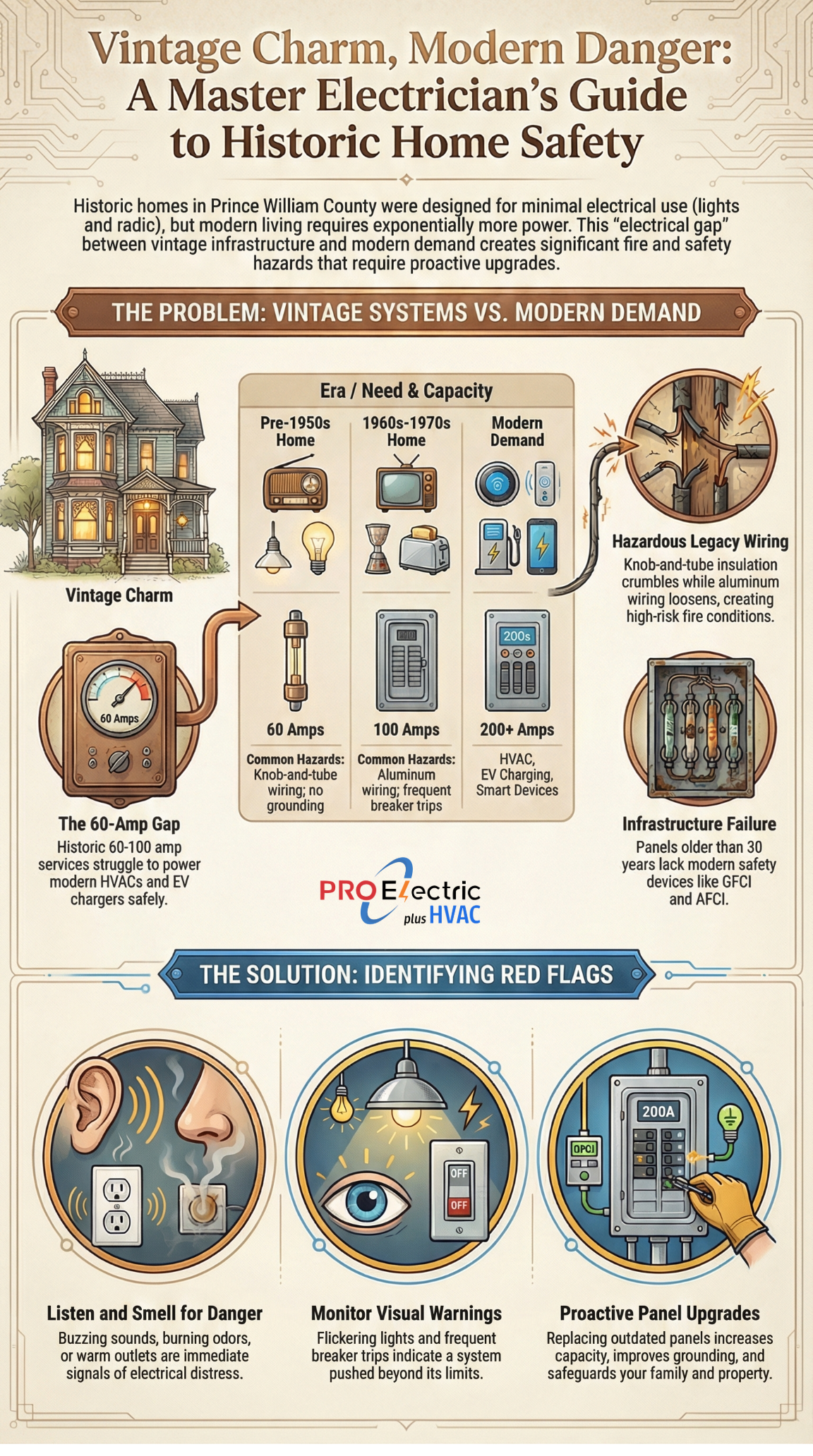
Older homes were built in times when electricity was a luxury, not a necessity. Back then, a modest panel and wiring were enough for lights and a radio. Today, that same panel is expected to power HVAC systems, EV chargers, appliances, home offices, and entertainment systems. The result? A system that is not only outdated but also unsafe.
Why Older Panels Struggle in Historic Homes
Every electrical panel distributes power throughout your home. But in older homes, panels and circuits were never designed for today’s electrical demand. Homes built before 1980 often have electrical infrastructure dating back to earlier eras, including fuse boxes, older breaker panels, and wiring that predates modern building codes.
Aging panels often:
- Struggle under modern electrical loads
- Lacks adequate grounding or safety devices
- Corrode or deteriorate over time
- Have worn internal connections
- Operate with wiring systems that are themselves dangerous
These aren’t theoretical issues; they are real hazards that increase the risk of power loss, equipment damage, and fire.
The Top Electrical Problems I Encounter in Older Homes
1. Outdated Wiring Still in Service
Homes built before the mid-20th century sometimes have knob-and-tube wiring—a system that predates grounding and modern safety standards. Its cloth insulation can dry out, crumble, and expose live conductors. That makes wiring prone to overheating and fire.
2. Panels Overwhelmed by Modern Loads
Older panels were often installed with 60- to 100-amp service, designed for far fewer appliances. Today’s homes consume far more power, and these undersized panels struggle to meet load demand.
3. Frequent Breaker Trips and Power Fluctuations
If you’ve lived in an older Prince William County home and notice breakers trip when you use multiple appliances, that’s not a coincidence. Your panel is signaling that the circuit is overloaded or unsafe.
4. Corroded or Worn Connections
Over decades, moisture, temperature changes, and even pests can degrade panel connections. Corrosion weakens contact points, increasing resistance and heat inside the panel—two things no electrical system should tolerate.
5. Aluminum Wiring Hazards
Homes built between the 1960s and mid-1970s sometimes used aluminum conductors, which expand and contract more than copper wiring. That expansion and contraction loosens connections over time, generating heat that can lead to fire.
6. Lack of Grounding or Safety Devices
Many older systems lack proper grounding and don’t use modern safety breakers like GFCI or AFCI. Ungrounded electrical systems are more dangerous during faults and can’t prevent all shock hazards.
7. Fuse Boxes Instead of Breaker Panels
Fuse boxes are still found in some very old homes. They offer minimal protection compared with modern breaker panels and can’t handle current load demands.
8. Flickering or Dimming Lights
When lights flicker or dim, especially during heavy appliance use, it often indicates unstable voltage or overloaded circuits. This indicates that your panel or wiring is not keeping up.
9. Too Few Outlets and Circuit Overload
Older homes were built with far fewer receptacles—especially in kitchens and basements—leading homeowners to rely on extension cords. These are intended as temporary, not permanent, solutions and overload circuits.
10. Worn Breakers and Panels
Even if the panel functions, the breakers inside may be decades old and less reliable. Breakers can fail to trip under dangerous conditions or trip unpredictably even without an overload.
What It Means for You in Prince William County
Living in a historic town like Dumfries or Occoquan, or near historic estates like Rippon Lodge in Woodbridge, gives you a connection to the past. But your electrical system shouldn’t live in the past.
Older systems often mask issues until something goes wrong. That buzzing sound from an outlet, the flicker when the microwave starts, or the breaker that trips too often are all your electrical system’s way of communicating. Ignoring these warning signs doesn’t make them go away—it only puts your family and your property at risk.
Modern Demand Versus Vintage Infrastructure
Today’s homes use exponentially more electricity than they did when many of these historic houses were built. You have HVAC systems, smart devices, electric vehicles, and appliances that demand consistent, safe power delivery. Most older electrical infrastructure was never meant for this.
This mismatch leads not only to inconvenience but to real safety hazards:
- Fires caused by overheated circuits
- Electric shocks due to a lack of grounding
- Damage to appliances from unstable voltage
- Unexpected outages from overloaded panels
When You Should Act
Here are some indicators that it’s time to schedule a professional inspection or upgrade:
- Frequent breaker trips
- Buzzing sounds near outlets or panel
- Burning odors
- Warm outlets or panel covers
- Flickering lights with heavy loads
- Panel older than 30 years
- Use of extension cords to solve power shortages
These are not minor annoyances. They are early warning signs that your electrical system may not be safe.
The Bottom Line
Owning a historic home in Prince William County is a privilege. But the vintage charm of your home should not come with vintage electrical hazards.
In my experience as a Master Electrician, the older the home, the more important it is to proactively assess the electrical panel and wiring. Addressing panel and circuit issues early can protect your home, enhance daily comfort, and, most importantly, safeguard your family.
Your home has stood the test of time. Your electrical system should, too.
📞 Call 703-225-822 now or book online for installation guidance.
Prince William County, VA FAQs
1. What electrical hazards are common in older homes in Dumfries and Occoquan, VA?
Older homes in Dumfries and Occoquan often have outdated electrical panels, limited circuit capacity, aging wiring, and insufficient grounding. These conditions increase the risk of breaker trips, overheating, and electrical fires.
2. Why do breaker trips happen frequently in older Woodbridge VA homes?
Many older Woodbridge homes were built with 60- to 100-amp service. Modern appliances and HVAC systems can overload these panels, causing repeated breaker trips as a safety response.
3. Are historic homes near Rippon Lodge in Woodbridge at higher electrical risk?
Yes. Homes in historic areas often have aging panels and wiring systems that were not designed for modern power demands, increasing the likelihood of voltage instability and overloaded circuits.
4. Do older homes in Nokesville, VA, often need electrical panel upgrades?
Many Nokesville homes built before 1980 may have panels that lack modern safety features and sufficient amperage. An upgrade is often recommended when frequent breaker trips or flickering lights occur.
5. What are the warning signs that a Haymarket VA home has an outdated electrical panel?
Warning signs include warm breakers, buzzing noises, flickering lights, limited breaker space, burning odors, and panels older than 25 to 30 years.
6. Is aluminum wiring common in older Prince William County homes?
Yes. Some homes built in the 1960s and 1970s in areas such as Brentsville and Bristow may have aluminum wiring, which can loosen over time and pose overheating or fire hazards.
7. Can lack of grounding in older Dumfries or Occoquan homes cause shock risks?
Yes. Many older homes lack proper grounding, which increases the risk of electrical shock and equipment damage during faults.
8. Why do lights flicker in older Bristow VA homes?
Flickering lights can indicate loose neutral connections, overloaded panels, or voltage drop caused by insufficient service capacity in aging electrical systems.
9. Should I schedule an electrical inspection for a pre-1980 home in Prince William County?
Yes. Homes built before 1980 in towns like Woodbridge, Nokesville, and Haymarket should be professionally inspected to identify outdated panels, unsafe wiring, and code compliance issues.
10. Can upgrading an electrical panel improve safety in historic Prince William County homes?
Absolutely. A modern panel upgrade increases capacity, improves grounding, reduces fire risk, supports HVAC and EV charging needs, and brings the system closer to current safety standards.