
By Peter, Master Electrician | PRO Electric plus HVAC | Air Conditioning Systems
BOTTOM LINE UP FRONT (BLUF)
Most homeowners do not think about the condensate drain line until the AC stops working, water shows up where it should not, or the house starts feeling warm and humid. I see this problem all the time in homes across Fairfax County, Loudoun County, Arlington County, and Prince William County.
Your air conditioner does more than cool the air. It also pulls moisture out of your home. That moisture has to go somewhere. When the condensate drain line clogs, the water cannot drain properly. Once that happens, your system can shut down completely.
I am Peter with PRO Electric plus HVAC, and this is one of those small problems that can turn into a bigger mess fast.
What the Condensate Drain Actually Does
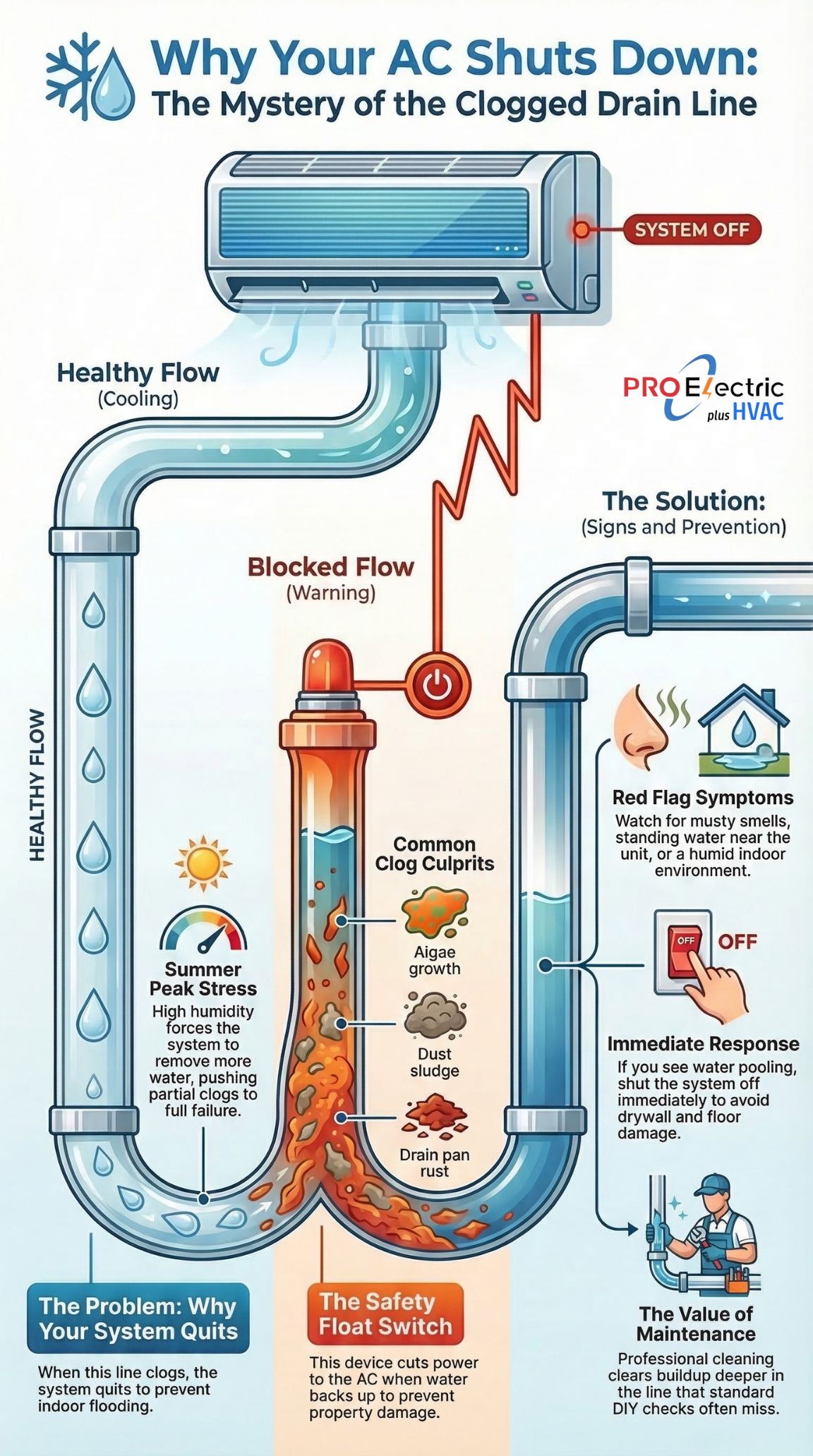
When your AC runs, the evaporator coil removes heat and humidity from the air inside your home. That moisture turns into condensation. From there, the water drips into a drain pan and flows out through the condensate drain line.
In a healthy system, that process happens quietly in the background. Most homeowners never notice it.
When the drain line gets blocked by algae, sludge, dirt, dust, or debris, the water backs up. If the backup fails, the safety switch shuts the system off to prevent water damage.
That means your AC may appear to have failed for no reason when the real issue is a clogged drain line.
Why a Clogged Drain Can Shut the System Down
A lot of homeowners are surprised when I explain this. They ask how a little drain line can stop the entire AC system.
The answer is simple. Modern systems often include a float switch or condensate safety switch. This device is there to protect your home. If the drain pan fills up because water is not draining, the switch cuts power to the cooling system.
That safety feature helps prevent:
- Water damage to ceilings, walls, and floors
- Overflow around the indoor air handler
- Mold and mildew growth
- Damage to surrounding equipment
So in many cases, the shutdown is not the main problem. It is the warning sign that your AC is trying to protect your home from a bigger one.
Common Signs of a Clogged Condensate Drain
This problem usually gives off clues before it becomes a full shutdown. Homeowners often notice one or more of these issues:
- The AC stops running without warning
- Water is pooling around the indoor unit
- The drain pan is full
- The house feels humid even with the AC on
- A musty smell comes from the system
- The thermostat is set to cool, but nothing happens
- The system turns off again after restarting
If you notice any of those signs, do not ignore them. Water and HVAC equipment do not mix well.
What Usually Clogs the Drain Line
The condensate line handles moisture every time the AC runs, especially during hot and humid weather. Over time, that damp environment becomes the perfect place for buildup.
The most common causes include:
- Algae growth inside the drain line
- Sludge made from dust and moisture
- Dirt pulled into the system over time
- Rust or debris from the drain pan
- Poor maintenance allows the buildup to keep growing
This is one reason routine AC maintenance matters. The clog often starts small and gets worse over time.
Why This Problem Gets Worse in Summer
During peak summer weather, your AC removes a lot more humidity from the air. That means more water flows through the drain system. In Northern Virginia homes, especially during long stretches of heat and humidity, the drain line works hard every day.
If the line already has partial buildup, heavy summer use can push it over the edge. That is why many homeowners first notice this issue during the hottest weeks of the year, when they need cooling the most.
What Happens if You Ignore It
A clogged condensate drain is not just a nuisance. It can create several avoidable problems.
First, it can leave you without cooling when the system shuts off.
Second, it can lead to water overflow, which can damage drywall, flooring, insulation, or ceilings.
Third, standing water around the system can contribute to mold growth and indoor air quality problems.
Fourth, repeated moisture exposure can damage parts of the air handler and nearby components.
I always tell homeowners the same thing. A clogged drain line is a simple issue when caught early. It becomes expensive when it is ignored.
What You Can Check on Your Own
There are a few safe things you can check before calling for service.
Look around the indoor unit for visible water. If you see moisture, standing water, or signs of overflow, shut the system off.
Check the drain pan if it is accessible. A full pan often points to a drainage problem.
Pay attention to musty smells, especially near the air handler or vents.
Make sure the air filter is clean. A dirty filter can contribute to other moisture and airflow problems that make the system work harder.
If your system has a visible drain line, you may notice standing water or no drainage when the AC has been running.
That said, this is not a problem to attack blindly. Homeowners sometimes clear part of the blockage but leave the buildup deeper in the line. Others reset the system without fixing the drain issue, which leads right back to another shutdown.
Why Professional Cleaning Matters
When we inspect a clogged condensate drain, we do more than clear the visible blockage. We look at the full system to understand why it happened and whether any water damage has already started.
At PRO Electric plus HVAC, we check:
- The drain line and drain pan
- The float switch and safety shutoff
- Moisture around the indoor unit
- Air filter condition
- Coil performance and airflow
- Signs of algae, sludge, or recurring blockage
That matters because a blocked drain may be the main issue, or it may be one sign of a larger maintenance problem.
How We Help Prevent It from Happening Again
Clearing the line is only part of the job. Prevention matters too.
Regular maintenance helps reduce buildup before it reaches the shutdown stage. During service, we inspect the condensate system, look for early warning signs, and make sure the drainage path is working correctly.
That simple step can help you avoid an unexpected loss of cooling in the middle of summer.
When to Call PRO Electric plus HVAC
Call us if:
- Your AC suddenly stopped cooling
- You see water around the indoor unit
- The drain pan is full
- The system keeps shutting off
- You notice a musty smell from the AC
- Your thermostat is calling for cooling, but the unit will not run
Homeowners across Fairfax County, Loudoun County, Arlington County, and Prince William County deal with this issue every summer. The good news is that the problem is usually fixable when addressed quickly.
My Advice as Peter
A clogged condensate drain may seem minor, but it can shut down your AC system, cause water damage, and leave your home hot and uncomfortable. The drain line is a small part of the system, but it plays a big role in keeping your air conditioner running safely.
If your AC has stopped working and there is water near the indoor unit, do not wait for the problem to get worse. Call PRO Electric plus HVAC. We will find the cause, clear the blockage, and help protect your home from bigger damage.
.
📞 Call 703-225-822 now or book online for AC estimate.