
Certified Master Electricians
Written by Peter
Master Electrician at PRO Electric plus HVAC, serving Fairfax, Loudoun, Arlington, and Prince William Counties. Virginia License #2705181607.
Clean, Layered Light Starts With the Right Recessed Plan.
Recessed lighting installation and LED upgrades across Fairfax, Loudoun, Arlington, and Prince William Counties.
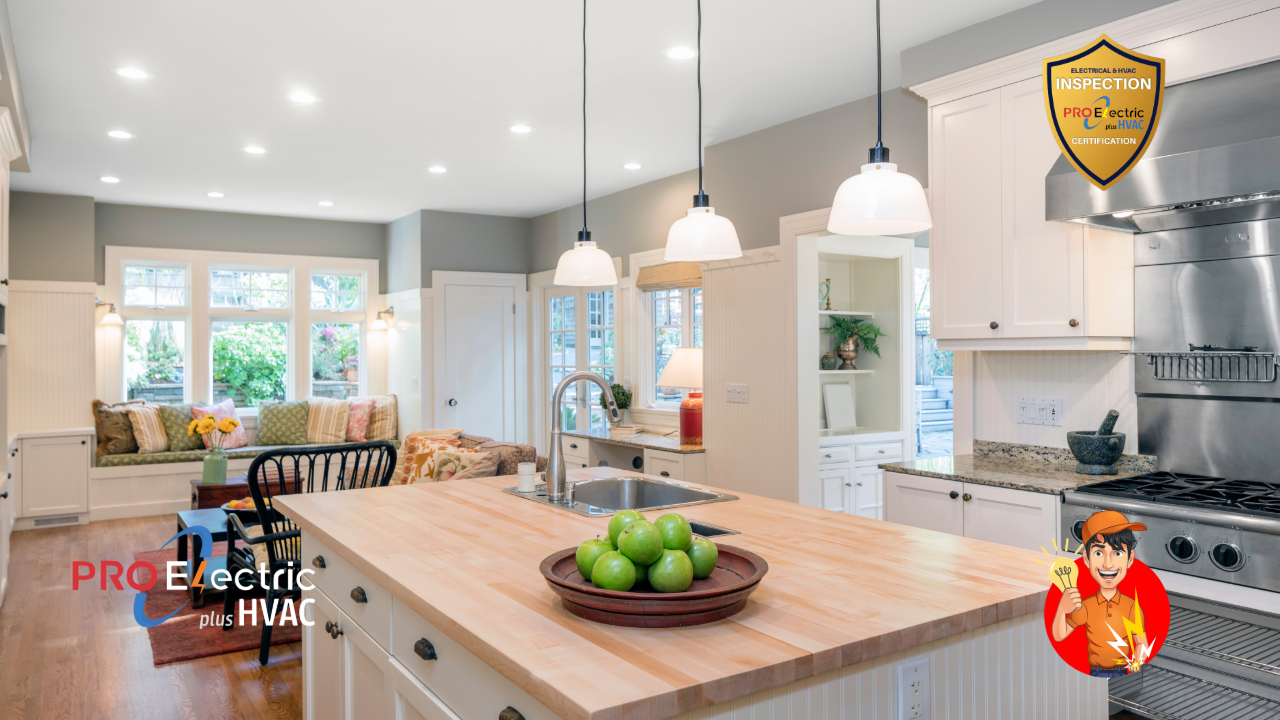
Hi, I am Peter, the Master Electrician at PRO Electric plus HVAC. Recessed lighting, the can lights and LED downlights that sit flush in the ceiling, is one of the most popular upgrades I install, and for good reason. Done well, it gives a room clean, even, layered light without a single fixture hanging in the way. Done carelessly, you end up with glare, dark corners, and a ceiling full of holes in the wrong spots. Let me walk you through how recessed lighting works and what a proper installation involves.
The goal is layered lighting, a mix of ambient, task, and accent light that makes a room both bright and comfortable. Recessed cans are the backbone of that plan. The trick is choosing the right number, spacing, beam spread, and color temperature so the light feels intentional rather than like a runway.
What goes into a good recessed lighting plan
- Layout and spacing. Spacing the cans evenly, and away from walls, gives smooth, even coverage instead of bright pools and dark gaps. A real plan accounts for the room size, ceiling height, and what each zone is used for.
- Color temperature and output. Warmer light suits living spaces while cooler light suits kitchens and work areas. Matching the color temperature and light output across the room keeps it from looking patchy.
- The right housing and trim. Modern slim LED downlights and wafer lights fit shallow ceilings, while IC rated housings are used where the fixture contacts insulation. The trim style controls glare and the look.
- Dimming and controls. Pairing the lights with a compatible dimmer lets you shift a room from bright and functional to soft and relaxed, and it sidesteps common dimmer and LED flicker problems.
New construction is easy, finished ceilings take real skill
Here is the honest part about cost and effort. In new construction or an open ceiling, recessed lights drop in quickly. In a finished ceiling, the work is fishing wire through joist bays, cutting clean holes in the right places, and tying into a circuit without tearing the room apart, which is where the craftsmanship shows. It also has to be done safely. Overloading a circuit, burying connections without a proper box, or crowding insulation against a fixture that is not rated for it are real fire risks. This is exactly the kind of job where a clean professional install pays for itself.
Wiring, circuits, and switches
A row of LED downlights draws very little power, so many can share a circuit, but the wiring still has to be done right and the load checked, especially if you are also adding to an already busy circuit. We plan the switching too, whether that is a single switch, three way switches at two doors, or separate controls for different zones. It all ties into broader outlet and switch work so the room functions the way you actually live in it.
How we help
We design the layout, pick housings, trims, and color temperature suited to each room, run the wiring safely to code, and set up the dimming and switching so the result is clean, even, layered light. We handle recessed lighting installation and LED lighting upgrades across Northern Virginia.
Frequently asked questions
How does recessed lighting installation work?
An electrician plans the layout and spacing, cuts openings in the ceiling, fishes wiring through the joists to each location, mounts the housings, ties the circuit into a switch, and installs the trims and LED downlights. In new construction the cans drop in easily, while a finished ceiling takes more skill to wire and cut cleanly without damaging the room.
How many recessed lights do I need in a room?
It depends on the room size, ceiling height, and how the space is used, which is why a layout plan matters more than a fixed number. The goal is even, layered light with no bright pools or dark corners, spacing the cans evenly and keeping them off the walls. A professional spacing plan gives smooth coverage and a balanced look.
Are LED recessed lights better than older can lights?
For most homes, yes. LED downlights and slim wafer lights use far less energy, run cooler, last for years, and fit shallow ceilings where bulky older cans will not. They also come in a range of color temperatures and many are dimmable. They are the standard choice today for both new installs and retrofits of older recessed fixtures.
Can recessed lights be put on a dimmer?
Yes, and it is one of the best parts of a recessed plan, letting you shift a room from bright task light to a soft glow. The key is using a dimmer rated for LED loads and matched to the fixtures, since a mismatch is a common cause of flicker or buzzing. An electrician can pair the lights with a compatible dimmer.
Is recessed lighting hard to install in an existing ceiling?
It is more involved than it looks. A finished ceiling means fishing wire through joist bays, cutting clean openings in the right spots, and tying into a circuit without opening up the room, plus keeping connections in proper boxes and insulation clear of fixtures that are not rated for contact. That combination of wiring, layout, and safety is why it is best left to a professional.
Planning recessed lighting for your home?
Recessed lighting installation and LED upgrades across Northern Virginia.