Certified Master Electricians
Written by Peter
Master Electrician at PRO Electric plus HVAC, serving Fairfax, Loudoun, Arlington, and Prince William Counties. Virginia License #2705181607.
A Little Spark Can Be Normal. A Big One Is Not.
Outlet repair and replacement across Fairfax, Loudoun, Arlington, and Prince William Counties.
Hi, I am Peter, the Master Electrician at PRO Electric plus HVAC. A question I hear a lot is whether it is normal for an outlet to spark when you plug something in. The honest answer is that a quick, tiny spark can be normal, but a large, repeated, or smoking spark is a warning. Knowing the difference is worth a minute, because one of these is harmless and the other is not. Let me explain.
A brief blue spark as a plug makes contact is usually just the rush of power as the connection closes. It is the bigger and stranger sparks that tell you something is wrong.
When a spark is normal
A small, quick spark at the moment a plug seats into the outlet is generally fine. Electricity moves to fill the connection the instant the prongs make contact, and that can show up as a brief snap of light. If it is fast, faint, and only at the moment of plugging in, it is usually nothing to worry about.
When a spark is a problem
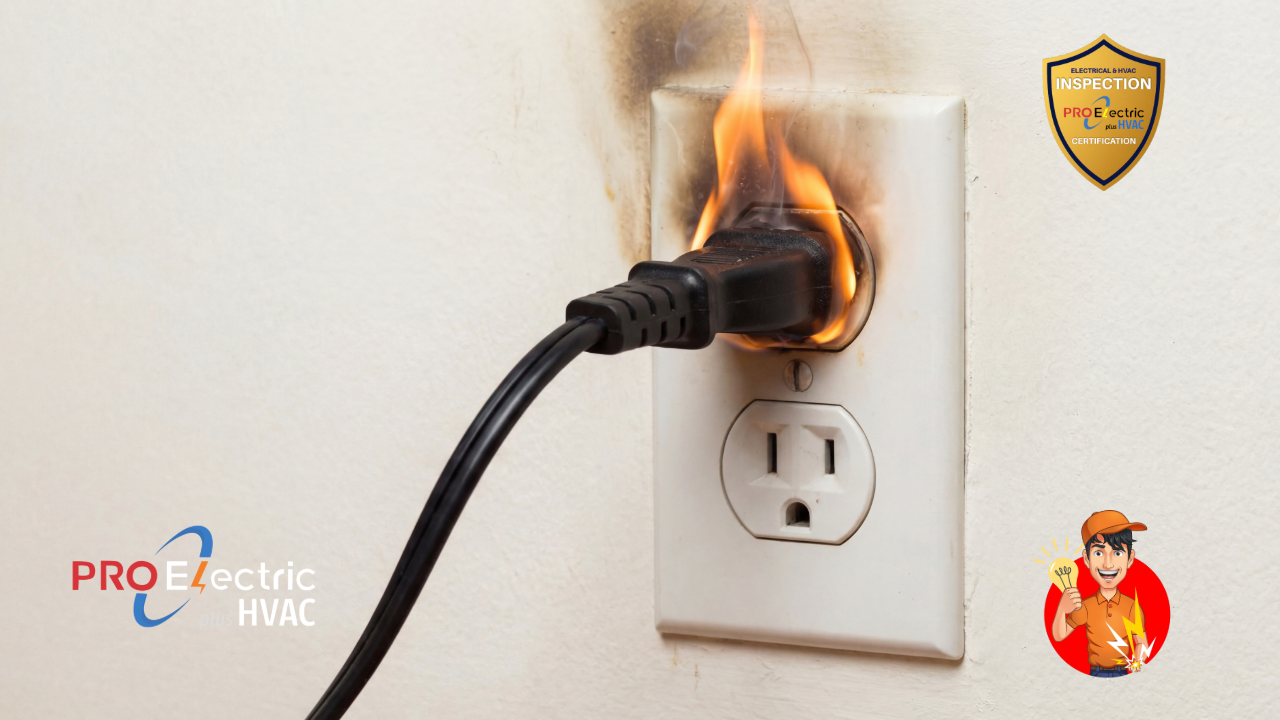
- Large or bright sparks. A spark that is big, loud, or throws visible flame is not normal and should stop you from using that outlet.
- Repeated or lingering sparks. Sparking that keeps happening, or continues after the plug is seated, points to a fault.
- A burning smell, heat, or scorch marks. These mean the outlet is overheating, a fire risk I cover in a burning smell from an outlet or panel.
- A loose plug that wiggles. If plugs fall out or wobble, the worn contacts inside arc and spark, a common reason an outlet stops working too.
- Sparks with water nearby. In a kitchen, bath, or outdoors, sparking points to a need for GFCI protection.
What to do
Stop using an outlet that sparks badly
If an outlet throws a large spark, feels warm, smells of burning, or shows scorch marks, stop using it and avoid plugging anything else into it. These are the signs of arcing and overheating behind the wall, which is exactly how electrical fires start. It is worth having it looked at rather than risking it.
We find out why an outlet is sparking, whether that is worn contacts, a loose connection, an overloaded circuit, or a wiring problem behind it, and we repair or replace it correctly. It is usually a small job, and one of the cheaper kinds of peace of mind in a home. We handle outlet and switch work across Northern Virginia as part of our outlet and switch service.
Frequently asked questions
Is it normal for an outlet to spark when I plug something in?
A quick, tiny spark at the moment a plug makes contact can be normal, since power rushes to fill the connection as the prongs seat. What is not normal is a large, bright, loud, or repeated spark, or one that comes with heat, a burning smell, or scorch marks.
When is a sparking outlet dangerous?
A sparking outlet is dangerous when the spark is large, happens repeatedly, lingers after the plug is in, or comes with heat, a burning smell, or scorch marks. These point to arcing and overheating behind the wall, which is how electrical fires start. Stop using that outlet and have it checked.
Why does my outlet spark and feel warm?
An outlet that sparks and feels warm is usually overheating from a loose connection, worn contacts, or an overloaded circuit. The heat and arcing are a fire risk, so it should not keep being used until an electrician has found and fixed the cause.
What causes an outlet to spark repeatedly?
Repeated sparking points to a fault rather than the normal flash of plugging in. Common causes are worn contacts that no longer grip the plug, a loose wire behind the outlet, or a circuit carrying more than it should. Each of these needs to be repaired rather than ignored.
Should I replace an outlet that sparks?
If the sparking is more than the brief flash of a plug seating, the outlet should be inspected and usually repaired or replaced. Worn or loose outlets arc internally, which generates heat and risks fire, so replacing the faulty outlet and fixing the connection behind it is the safe move.
Outlet sparking or feeling warm?
Outlet repair and replacement across Northern Virginia.