
Certified Master Electricians
Written by Peter
Master Electrician at PRO Electric plus HVAC, serving Fairfax, Loudoun, Arlington, and Prince William Counties. Virginia License #2705181607.
Big Appliances Need a 240 Volt Circuit, Not Just Any Outlet.
240 volt circuit and outlet installation across Fairfax, Loudoun, Arlington, and Prince William Counties.
Hi, I am Peter, the Master Electrician at PRO Electric plus HVAC. Most outlets in your home are 120 volt, the standard receptacle you plug a lamp or laptop into. But the heavy hitters, an electric dryer, an electric range or oven, a welder, an air compressor, or serious workshop tools, need a 240 volt outlet on a dedicated circuit. Let me explain what a 240 volt outlet is, why these appliances need one, and what goes into adding one safely.
The short version is that 240 volt appliances draw far more power than a normal outlet and circuit can deliver. They get their own dedicated circuit, a larger wire sized to the load, and a double pole breaker in the panel. The receptacle itself is a different shape so you cannot plug the wrong thing into it.
What adding a 240 volt outlet involves
- A dedicated circuit. A 240 volt appliance gets its own circuit straight from the panel, not shared with anything else, which is the same principle behind any dedicated circuit for a heavy load.
- The right wire and breaker. The wire gauge and the double pole breaker are sized to the appliance amperage, whether that is a 30 amp dryer, a 50 amp range, or a larger workshop tool. Undersized wire is a fire risk, so this is not a place to guess.
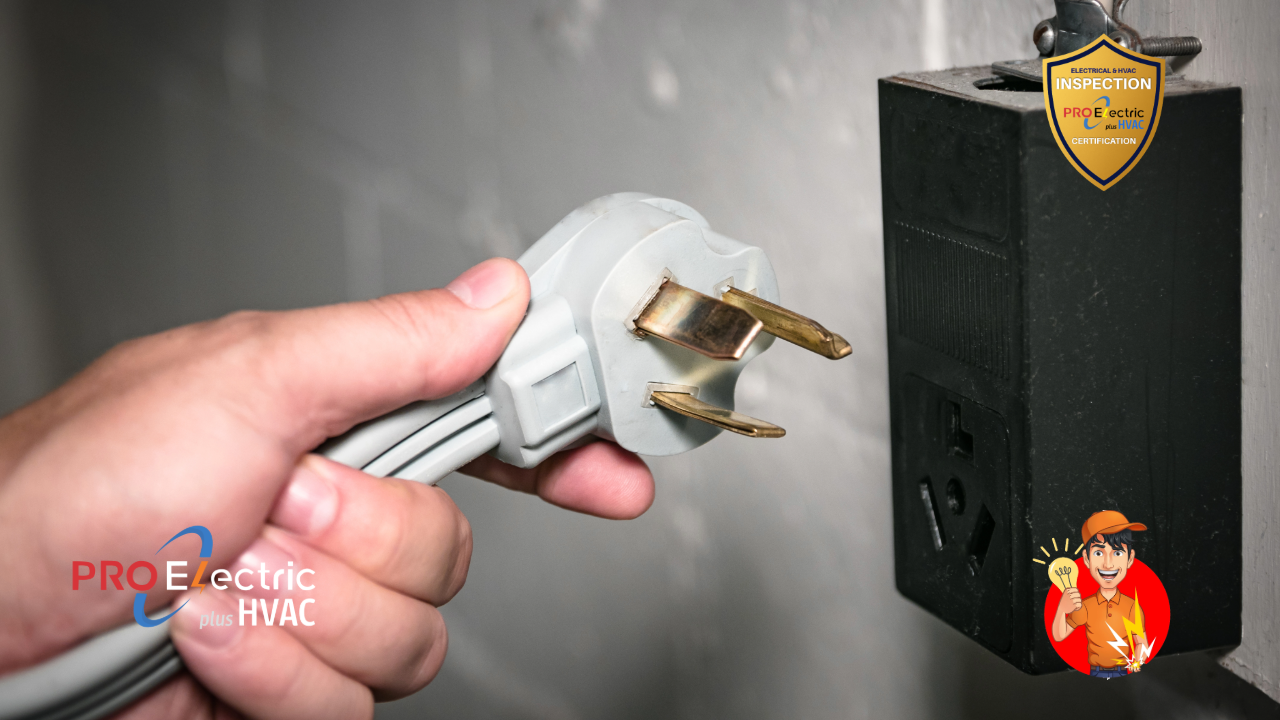
- The correct receptacle. A 240 volt receptacle has a distinct shape and number of slots matched to the plug, often three prong or four prong, so the appliance connects safely and correctly.
- Panel capacity. The panel has to have room and capacity for the new circuit. If it is already full, that ties into whether your panel can take more circuits or needs attention first.
This is dedicated circuit work, not a DIY outlet swap
Let me be straight about why this is electrician work. A 240 volt circuit carries enough power to start a fire or seriously hurt someone if the wire is undersized, the breaker is wrong, the connections are loose, or the receptacle is miswired. It also has to match the specific appliance, since a dryer, a range, and a welder can all need different amperage and a different receptacle. On top of that, this work needs a permit and inspection in our counties. A licensed electrician sizes the circuit to the appliance, runs the right wire, installs the correct breaker and receptacle, and makes sure the panel can handle it. That is how you get an outlet that runs your equipment safely for years.
Common reasons people add one
The usual calls are an electric dryer or range moving into a spot that only had gas or no hookup, a garage or basement turning into a real workshop with a table saw, welder, or compressor, or an appliance upgrade that needs more power than the old circuit supplied. Each one needs the circuit matched to the equipment, and sometimes it means freeing up space or adding capacity in the panel, which overlaps general outlet and circuit work.
How we help
We size the circuit to your specific appliance, run the correctly gauged wire, install the right double pole breaker and receptacle, confirm the panel can carry the load, and handle the permit and inspection. We install 240 volt circuits and outlets across Northern Virginia.
Frequently asked questions
What is a 240 volt outlet for?
A 240 volt outlet powers heavy appliances that a standard 120 volt outlet cannot run, such as an electric dryer, an electric range or oven, a water heater, a welder, an air compressor, or large workshop tools. These draw far more power than a normal outlet delivers, so they get a dedicated circuit, larger wire, a double pole breaker, and a differently shaped receptacle.
Can I install a 240 volt outlet myself?
This is not a DIY job. A 240 volt circuit carries enough power to cause a fire or serious injury if the wire is undersized, the breaker is wrong, or the connections are loose, and it must be matched to the specific appliance amperage. It also requires a permit and inspection in our counties. A licensed electrician sizes and installs it correctly and safely.
What size breaker and wire does a 240 volt outlet need?
It depends on the appliance. An electric dryer commonly needs a 30 amp circuit, an electric range often needs 50 amps, and workshop equipment varies. The wire gauge and the double pole breaker are sized to that amperage, since undersized wire overheats and is a fire risk. An electrician matches the circuit to your equipment so it runs safely.
Do I need a dedicated circuit for a 240 volt appliance?
Yes. A 240 volt appliance gets its own dedicated circuit running straight from the panel, not shared with other outlets or devices. That dedicated run, sized to the load, is what lets the appliance draw its full power safely without overloading anything else. If the panel is full, an electrician will address capacity before adding the circuit.
Why is my 240 volt outlet a different shape?
A 240 volt receptacle has a distinct shape and slot pattern, often three prong or four prong, so that only the matching appliance plug fits and you cannot accidentally plug a 120 volt device into it. The exact configuration depends on the appliance and its amperage, which is why the receptacle is chosen to match the equipment it serves.
Adding an electric dryer, range, or workshop tool?
240 volt circuit and outlet installation across Northern Virginia.