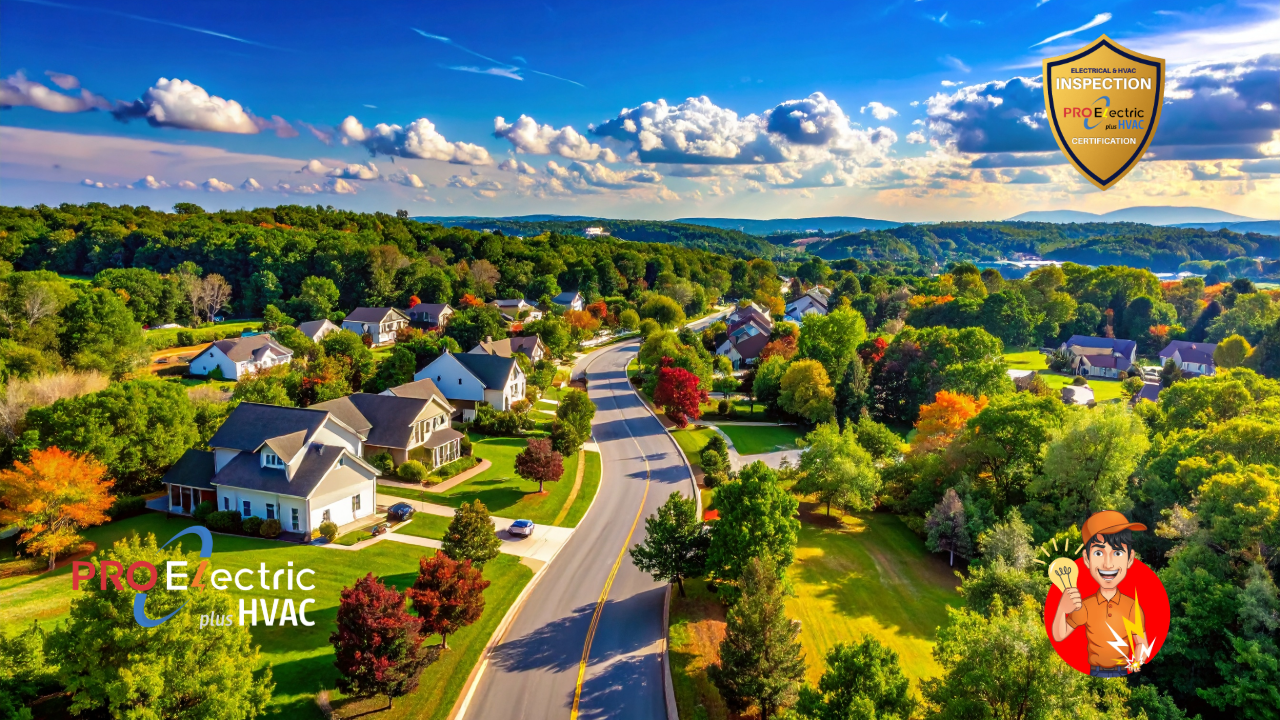
Aldie, VA, sits at the edge of Loudoun County’s development corridor, a community where the county’s suburban density gives way to the larger lots, longer driveways, and substantial custom homes of western Loudoun County’s estate market. The properties here are significant investments, and the owners who built or purchased them have typically invested in finishes, technology, and landscaping that reflect that significance. The HVAC systems in many of these homes have not received the same level of investment, with multi-zone systems designed by builders rather than HVAC engineers, or single-system configurations that were adequate at original construction but inadequate for households now occupying 5,000 to 8,000 square feet of conditioned space.
Why Estate-Scale Properties Require a Different HVAC Approach
A 6,000-square-foot Aldie estate home is not just a bigger version of a 2,000-square-foot Ashburn townhome. Its HVAC requirements differ not just in scale but in kind. The solar exposure varies dramatically between a south-facing great room with two-story windows and a north-facing master suite on the opposite side of the same floor — creating peak cooling loads that occur at different times of day and that a single thermostat controlling a single system cannot address simultaneously without over-conditioning one zone to adequately condition the other. The basement home theater, the owner’s office above the garage, and the guest suite in the finished third floor each have occupancy patterns and thermal loads that bear no relationship to the main living floor’s conditions at any given hour. HVAC systems designed with a single thermostat and a common air distribution network are, in estate-scale properties, the wrong tools for the job regardless of how well they were installed.
What Multi-Zone HVAC Design Actually Looks Like in an Aldie Estate
A properly designed multi-zone HVAC system for an Aldie estate home begins with a Manual J load calculation performed on each zone independently — not a single whole-house calculation that produces one number applied to the entire building, but a zone-by-zone analysis that identifies the actual peak load of each conditioned area at its specific solar exposure, occupancy pattern, and thermal characteristics. The calculation drives zone equipment sizing, ductwork design, and system selection. In larger Aldie properties, a properly designed multi-zone system typically involves two or three separate air handlers, each serving a specific zone of the home, with its own thermostat and independently controlled equipment — rather than a single system with dampers attempting to manage zones from a single piece of equipment. The result is comfort in every zone at every hour, without the compromise that single-system zone damper control imposes.
HVAC Challenges Specific to Aldie Estate Properties
- South and west facing rooms with large glazed areas that produce afternoon peak loads no shared system can address without over-cooling adjacent zones
- Finished upper floors that accumulate heat from roof gain that single-system thermostats located on main floors never measure
- Detached garages, pool houses, and guest cottages requiring independent conditioning without ducted connection to the main system
- Home theaters, wine cellars, and server rooms with specific humidity and temperature requirements incompatible with residential comfort zones
- High-efficiency systems whose performance is undermined by ductwork designed for builder-grade systems that were replaced
- Propane or oil heating in western Loudoun locations without gas service — heat pump conversion economics are compelling at this scale
Variable-Speed Technology and Aldie’s Large Home Efficiency Opportunity
Variable-speed heat pump and air handler technology delivers its greatest efficiency advantage in large homes — properties where the difference between peak design load and average operating load is substantial. An Aldie estate home on a mild spring day requires a fraction of its peak summer cooling capacity. A single-speed system serving this home either runs at full capacity and short-cycles constantly on mild days — wearing the compressor, failing to dehumidify adequately, and using more energy than the load requires — or does not run at all, allowing temperatures to drift. A variable-speed system modulates its compressor and fan output to continuously match the actual load, running at low capacity for hours on a mild day, providing perfect dehumidification, quiet operation, and minimum energy consumption. At the scale of an Aldie estate home’s annual HVAC energy consumption, the efficiency difference between single-speed and variable-speed equipment amounts to a meaningful annual dollar figure that compounds over the system’s service life.
Whole-Home Energy Management for Aldie Estate Properties
Aldie estate homeowners who want to address HVAC efficiency comprehensively — not just equipment replacement but the full system integration that delivers maximum performance — benefit from a whole-home energy management approach: Manual J load calculation for each zone, ductwork assessment and sealing, equipment selection for each zone based on calculated loads, smart thermostat configuration for the specific multi-system setup, whole-home surge protection for all HVAC equipment, and UV germicidal irradiation at each air handler’s evaporator coil. PRO Electric plus HVAC designs and implements this integrated approach for Aldie estate homeowners who want their HVAC systems to perform at the level their investment in the property warrants.
Related Articles
The Mini-Split Solution for Aldie’s Detached Structures
Aldie estate properties frequently include outbuildings — detached garages, pool houses, guest cottages, stables with climate-controlled tack rooms — whose conditioning requirements cannot be met by extending the main house’s ductwork. Mini-split heat pump systems provide full heating and cooling for these structures through a single outdoor unit and one or more indoor air handlers, with no ductwork required and no connection to the main house electrical or mechanical systems. PRO Electric plus HVAC installs single-zone and multi-zone mini-split systems throughout Aldie’s estate outbuildings as a standalone service — handling the electrical dedicated circuit, the Loudoun County mechanical permit, and the system commissioning in a single project scope.
Serving Aldie, Middleburg, Purcellville, and All of Western Loudoun County
PRO Electric plus HVAC designs multi-zone HVAC solutions for Aldie’s estate properties — Manual J load calculations by zone, variable-speed equipment selection, ductwork assessment, and mini-split solutions for detached structures, with full Loudoun County permitting.
Schedule an Estate HVAC Consultation
703.225.8222
Frequently Asked Questions
Why do large Aldie homes need a different HVAC design than smaller homes?
Large estate homes have different solar exposures, occupancy patterns, ceiling heights, and room uses across the property. A single HVAC system or thermostat often cannot manage these differences effectively, leading to uneven comfort and poor efficiency.
What is a properly designed multi-zone HVAC system?
A properly designed multi-zone HVAC system uses separate load calculations for each zone and often includes two or more air handlers with independent thermostats. This allows each area of the home to be heated or cooled based on its actual needs rather than forcing one system to serve the entire property equally.
Why is variable-speed HVAC technology a better fit for estate properties?
Variable-speed systems adjust their output to match the home’s real-time demand. In large homes where heating and cooling needs change throughout the day, this improves comfort, humidity control, energy efficiency, and equipment longevity compared to single-speed systems.
How should detached garages, pool houses, and guest cottages be conditioned?
Detached structures are often best served by mini-split heat pump systems. These systems provide independent heating and cooling without requiring ductwork from the main house, making them ideal for outbuildings with separate comfort needs.
What should be included in a whole-home HVAC strategy for an Aldie estate?
A complete strategy should include zone-by-zone load calculations, ductwork assessment, properly matched equipment, smart thermostat setup, surge protection, and indoor air quality upgrades such as UV treatment. This creates a coordinated HVAC system that matches the scale and investment level of the property.
References
Air Conditioning Contractors of America. (2023). ACCA Manual J: Residential load calculation, 8th edition. ACCA.
Air Conditioning Contractors of America. (2023). ACCA Manual Zr: Residential zoning systems. ACCA.
U.S. Department of Energy. (2024). Heat pump systems: Variable-speed technology. Energy Saver. https://www.energy.gov/energysaver/heat-pump-systems
American Society of Heating, Refrigerating and Air-Conditioning Engineers. (2022). ASHRAE Standard 55: Thermal environmental conditions for human occupancy. ASHRAE.