By Peter, Master Electrician | PRO Electric plus HVAC | EV Charger Installation
BOTTOM LINE UP FRONT (BLUF)
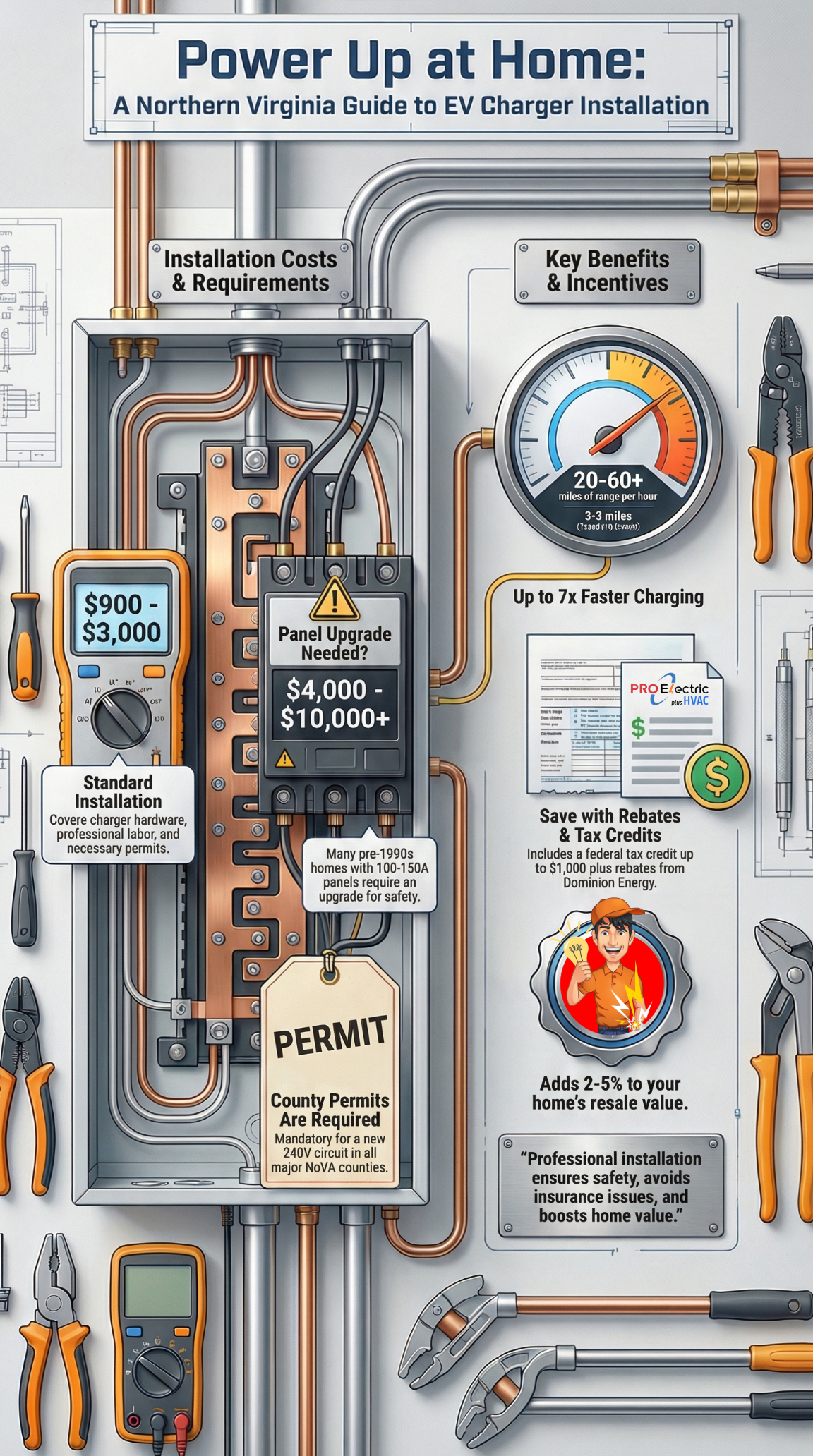
Northern Virginia EV owners and future buyers: Installing a Level 2 home charger (240V, 20-60+ miles range/hour) is the fastest, most convenient way to charge, typically costing $900-$3,000 (average $1,500-$2,500) without panel work, or $5,000-$13,000+ if a 200A+ panel upgrade is needed for older homes. Many pre-1990s panels lack capacity, risking overloads amid Dominion’s projected EV growth. Permits are required for new circuits in Fairfax, Loudoun, Arlington, and Prince William Counties. Fairfax currently waives fees through Oct 31, 2025. Incentives include up to $1,000 federal tax credit + Dominion rebates. Always use a licensed electrician. DIY risks shocks, fires, and insurance voids. Professional installation ensures NEC compliance, safety, and future-proofing (adds 2-5% home value). Schedule a free assessment today to charge safely and efficiently.
Most Common FAQs:
How much does it cost to install a Level 2 EV charger at home in Northern Virginia in 2025?
A standard Level 2 EV charger installation typically costs $900–$3,000 (average $1,500–$2,500), covering the charger hardware ($400–$1,200), labor, wiring, and permits. If your older home requires an electrical panel upgrade to 200A+ (common in pre-1990s properties), add $4,000–$10,000+. Costs vary by county, wiring distance, and outdoor vs. indoor setup. Fairfax County currently waives permit fees through October 31, 2025, helping reduce expenses.
Do I need a permit to install an EV charger in Fairfax, Loudoun, Arlington, or Prince William County?
Yes, all four counties require permits for new circuits or hardwired Level 2 installations. Plugging into an existing 240V outlet (e.g., a dryer outlet) often doesn’t require one. Fairfax waives electrical/building permit fees through October 31, 2025. Loudoun, Arlington, and Prince William have standard fees ($100–$500). A licensed electrician usually handles the application and inspections to ensure NEC compliance—skipping permits risks fines, insurance issues, or failed home inspections.
Will I need an electrical panel upgrade for my EV charger in Northern Virginia?
Many older homes (especially with 100–150A panels) need an upgrade to safely support a Level 2 charger’s 40–60A load. Signs include frequent trips, outdated brands such as Federal Pacific, or a full-load calculation showing insufficient capacity. Upgrading to 200A+ costs $4,000–$10,000+ but future-proofs your home for EVs, appliances, and solar. A professional assessment is essential, most installers include this check.
Table of Contents
-
Section Key Takeaways & Current Insights (as of December 2025) Detailed Guide to EV Charger Installation in Northern Virginia Comprehensive overview of Level 2 home charging benefits, costs, requirements, and incentives amid Dominion Energy’s rapid EV growth projections. Understanding EV Charger Levels Level 1 (slow, 120V) vs. Level 2 (recommended 240V, 20-60+ miles/hour) vs. Level 3 (commercial only); why Level 2 is ideal for NoVA homes. Do You Need a Panel Upgrade? Many pre-1990s 100-150A panels lack capacity for 40-60A chargers; load calculations, NEC rules, and upgrade triggers explained. Step-by-Step Installation Process From assessment and charger selection to permitting, wiring, inspection, and activation—professional steps only. County-Specific Permit Requirements (December 2025) Table comparing Fairfax (fee-waived through Oct 31, 2025), Loudoun, Arlington, and Prince William permit processes and costs. Costs Breakdown (Northern Virginia, December 2025) $900-$3,000 typical (average $1,500-$2,500); hardware, labor, permits; +$4,000-$10,000 if panel upgrade needed. Incentives and Rebates Federal tax credit up to $1,000; Dominion Energy $125 rebate + managed charging rewards; off-peak savings tips. Safety and Best Practices Why professional installation only; NEC compliance, common mistakes, HOA rules in Virginia. Final Thoughts from Peter: Charge Ahead Safely 20+ years of experience: Proper setup adds convenience and 2-5% to home value—contact for a free assessment.
Detailed Guide to EV Charger Installation in Northern Virginia: What Every Homeowner Needs to Know
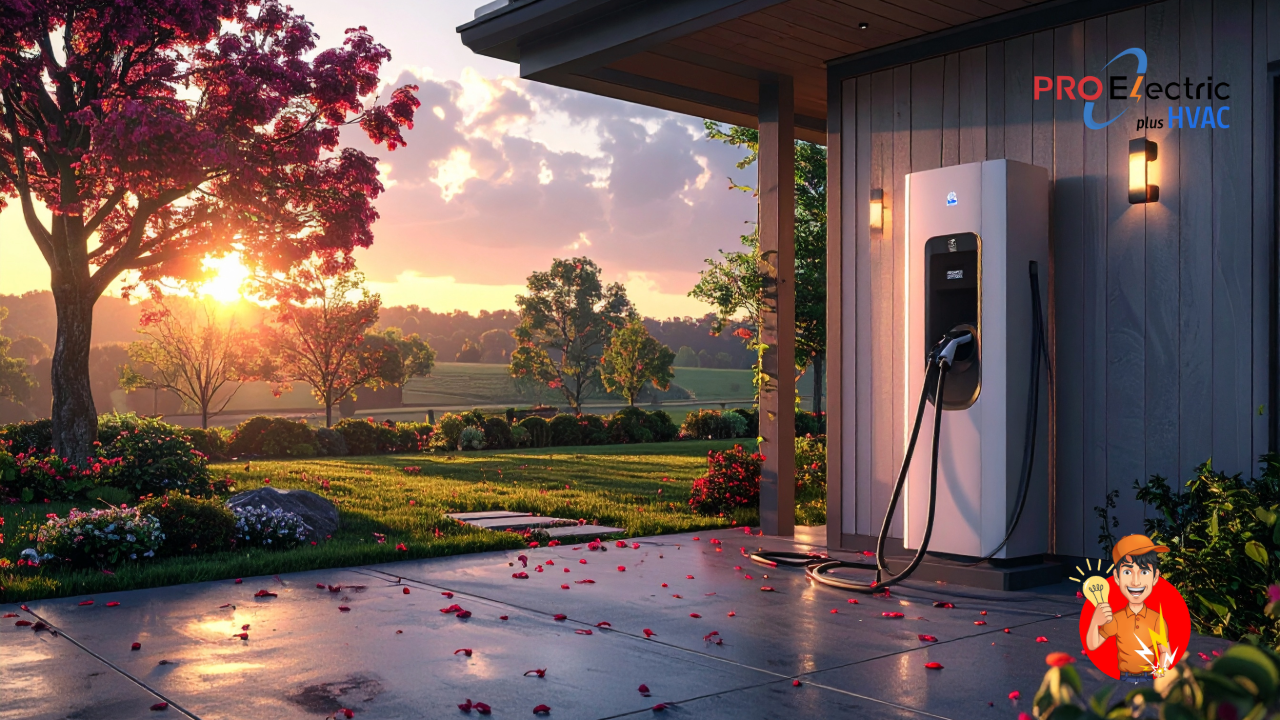
As electric vehicle (EV) ownership surges in Northern Virginia, with Dominion Energy projecting rapid growth amid ~5% annual increases in electricity demand, installing a home Level 2 charger is a smart move for convenience, faster charging, and a potential home value boost. This detailed guide covers everything residential homeowners in Fairfax, Loudoun, Arlington, and Prince William Counties need: types of chargers, installation process, costs (as of December 2025), permits, panel requirements, incentives, and safety tips. Whether you’re adding a Tesla Wall Connector or a universal Level 2 unit, professional installation ensures compliance and avoids risks.
Understanding EV Charger Levels
- Level 1: Uses a standard 120V outlet (like for appliances). Adds ~3-5 miles of range per hour. No installation needed if plugging into an existing outlet, but slow—often 24+ hours for a full charge.
- Level 2: Recommended for home use. 240V circuit, adds 20-60+ miles per hour (full charge in 4-8 hours typically). Requires a dedicated circuit; most installations are Level 2 (hardwired or plugged into a NEMA 14-50 outlet).
- Level 3 (DC Fast): Commercial only—not for homes due to high power needs.
For most NoVA homeowners, a 40-50-amp Level 2 charger (e.g., ChargePoint, JuiceBox, or Tesla) strikes a balance between cost and speed.
Do You Need a Panel Upgrade?
Many older Northern Virginia homes (especially pre-1990s) have 100-150-amp panels that can’t safely support a Level 2 charger (typically a 40-60-amp continuous load).
- Signs you need an upgrade: frequent breaker trips, outdated brands (e.g., Federal Pacific or Zinsco), or a load calculation showing insufficient capacity.
- Recommendation: Upgrade to 200A+ panel (often $4,000-$10,000+). This future-proofs for EVs, solar, or other high loads.
- Virginia follows NEC standards (currently based on 2020/2021 editions, with updates ongoing). Load calculations treat EV chargers as continuous (125% of nameplate). GFCI protection required for outdoor/receptacle installs; surge protection often advised.
A licensed electrician performs a load calculation during assessment—essential before proceeding.
Step-by-Step Installation Process
- Assessment: Electrician evaluates panel capacity, wiring route, and charger location (garage standard; outdoor possible with weatherproofing).
- Charger Selection: Choose UL-listed, smart-enabled for incentives (e.g., Wi-Fi for managed charging).
- Permitting: Required for new circuits/hardwiring in all NoVA counties.
- Installation: Run a dedicated circuit (usually 6-8-gauge wire), install a breaker, and mount the charger. Takes 2-8 hours typically.
- Inspection: County verifies code compliance.
- Activation: Test and connect to app/utility programs.
Always hire a licensed, insured electrician experienced in EVSE (Electric Vehicle Supply Equipment).
County-Specific Permit Requirements (December 2025)
| County | Permit Required? | Fees (2025) | Application Process | Notes |
|---|---|---|---|---|
| Fairfax County | Yes for new circuit/hardwire | Waived through Oct 31, 2025 (electrical/building) | Online via PLUS system; no plans needed for single-family | Fee waiver encourages adoption; re-inspection fees may apply. |
| Loudoun County | Yes for Level 2 | Standard (~$100-300) | Through county portal; contractor handles | Check for HOA rules; rapid growth increases scrutiny. |
| Arlington County | Yes | ~$150-500 | Strict; online or in-person | Historic homes may need extra reviews. |
| Prince William County | Yes | Standard; business license required for contractors | ePortal system; load calc mandatory | Homeowners can pull own permit with exemption form. |
Plugging into an existing 240V outlet (e.g., dryer) often skips the permit if no new wiring.
Costs Breakdown (Northern Virginia, December 2025)
Typical Level 2 installation (without panel upgrade): $900-$3,000 (average $1,500-$2,500).
- Charger hardware: $400-$1,200
- Labor & materials (wiring, breaker): $500-$1,500
- Permit/inspection: $0 (Fairfax waived) to $300
- With panel upgrade: Add $4,000-$10,000+
Factors increasing cost: Long wiring runs, outdoor install, trenching/conduit.
Incentives and Rebates
- Dominion Energy EV Charger Rewards: $125 rebate for new qualified Level 2 smart charger + enrollment in managed charging program (allows remote adjustments during peaks; earn $40 annually).
- Federal Tax Credit: Up to $1,000 for charger/installation (30% of costs) via Alternative Fuel Refueling Property Credit.
- No major state rebates for residential chargers currently, but check Dominion programs.
Enroll smart chargers for off-peak savings via time-of-use rates.
Safety and Best Practices
- Why Professional Only: High-voltage work risks shocks, fires, or code violations (voiding insurance).
- NEC Compliance: Dedicated circuit (usually), proper grounding, ventilation if indoor.
- Common Mistakes to Avoid: Undersized wiring, no load management, skipping permits.
- HOA Considerations: Virginia law allows personal chargers with reasonable restrictions; provide plans from licensed pro.
Final Thoughts from Peter: Charge Ahead Safely
With over 20 years of experience electrifying homes in Northern Virginia, I’ve installed hundreds of EV chargers, transforming garages into convenient “gas stations.” A proper Level 2 setup not only slashes charging time but also prepares your home for the EV future, adding 2-5%to your home’s resale value. Don’t risk DIY or outdated panels amid growing demands.
Contact a trusted, licensed electrician (like us at PRO Electric) for a free assessment. Book online today.
We handle permits, incentives, and everything code-compliant across Fairfax, Loudoun, Arlington, and Prince William.
Drive electric with confidence, reach out today!
Sources:
Dominion Energy. (n.d.). EV charger rewards. https://www.dominionenergy.com/virginia/save-energy/ev-charger-rewards
Fairfax County Government. (n.d.). Good news if you’re installing an electric vehicle charging station. Land Development Services. https://www.fairfaxcounty.gov/landdevelopment/good-news-if-youre-installing-electric-vehicle-charging-station
Internal Revenue Service. (n.d.). Alternative fuel vehicle refueling property credit. https://www.irs.gov/credits-deductions/alternative-fuel-vehicle-refueling-property-credit
National Fire Protection Association. (2023). National Electrical Code (NEC) 2023 edition. NFPA 70.
Prince William County Government. (n.d.). Residential electrical vehicle (EV) charging stations. Building Development Division. https://www.pwcva.gov/department/building-development-division/residential-EV-charging-stations
U.S. Department of Energy. (n.d.). Alternative Fuels Data Center: Residential electric vehicle (EV) charging station rebate – Dominion Energy. https://afdc.energy.gov/laws/12615
Virginia General Assembly. (2021). Virginia Uniform Statewide Building Code. (Based on relevant editions adopting NEC standards).