HVAC Technicians | Licensed Master Electricians
Written by Peter
Master Electrician at PRO Electric plus HVAC, serving Fairfax, Loudoun, Arlington, and Prince William Counties. Virginia License #2705181607.
One System for Heating and Cooling. Year-Round Comfort, Lower Bills.
Heat pump installation, replacement, and repair across Fairfax, Loudoun, Arlington, and Prince William Counties. The smarter way to keep your home comfortable.
Hi, I am Peter, the Master Electrician at PRO Electric plus HVAC. If you are tired of juggling a separate furnace and air conditioner while your bills keep climbing, a heat pump is worth a real look. It is one system that heats and cools your whole home, all year, and it usually does it for less than you are paying now. Here is what makes our shop a little different: a heat pump is an all-electric appliance, and we are licensed Master Electricians as well as HVAC technicians. That combination matters more than most homeowners realize, and I will explain why a bit further down.
Heat pumps are also the most misunderstood heating and cooling system, so this guide answers the questions people actually search for and ask their AI assistant. How does a heat pump even work? Do they really work in a Northern Virginia winter? Will it lower my bills? What about the tax credits? And what goes wrong with them? Let me walk you through all of it in plain language.
How does a heat pump actually work?
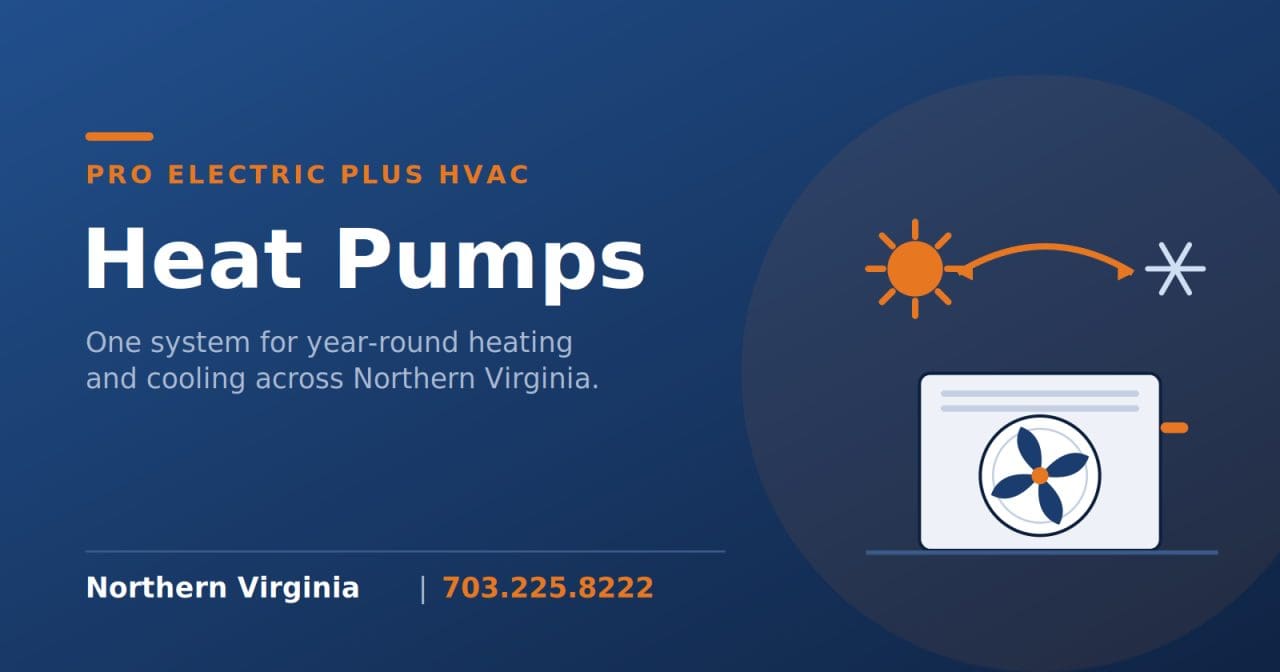
Think of it as a heater and an air conditioner in one box. The trick is that a heat pump does not generate heat by burning fuel, as a furnace does. It moves heat from one place to another, and doing so takes far less energy than generating it. That single idea is the whole reason a heat pump can run so efficiently.
In the winter, it pulls heat out of the outside air, even on cold days, and carries it indoors to warm your home. In the summer, it runs in reverse, removing heat from inside the house and pushing it outside to keep you cool, exactly like your air conditioner does. One unit, both jobs, every season. Because it is moving energy instead of generating it, a good heat pump can deliver several times more heating energy than the electricity it consumes, which is something no furnace can claim.
But do heat pumps work in cold Northern Virginia winters?
This is the question I get more than any other, and the answer is yes. The old reputation that heat pumps cannot handle the cold is years out of date. Today’s cold-climate heat pumps use variable-speed compressors that extract usable heat from the outside air even when temperatures drop well below freezing, and our region falls within a moderate-to-cold zone where they perform beautifully.
For the rare deep cold snap, most systems include a backup, often called auxiliary or emergency heat, that kicks in to keep your home warm no matter how low it goes. You will also notice the outdoor unit run a brief defrost cycle now and then in winter, where it melts off frost and may blow slightly cooler air for a few minutes. That is normal and built in. The technology has come a long way, and modern units keep homes comfortable through real Virginia winters.
Air source or ground source: the two types
There are two main kinds, and the right one depends on your home, your property, and your budget.
Air-source heat pump
The most common type. It transfers heat between your home and the outside air. It is efficient, more affordable to install, and a great fit for most Northern Virginia homes.
Ground-source (geothermal) heat pump
It transfers heat between your home and the ground through buried loops. It is even more efficient and quieter, with a higher upfront cost, and it suits homeowners focused on the lowest long-term operating cost.
Heat pump versus a furnace and air conditioner: should you switch?
A traditional setup uses two appliances, a furnace that burns gas or oil for heat and a separate air conditioner for cooling. A heat pump replaces both with one electric system. The advantages people care about are straightforward.
- Energy savings. Moving heat instead of making it uses far less energy, which lowers what you spend.
- Comfort all year. Steady heating and cooling from one appliance, every season, with no separate furnace to maintain.
- A lower carbon footprint. An all-electric system runs cleaner, especially as the grid gets greener.
- Quiet performance. Modern variable-speed units run far quieter than the older systems they replace.
If your furnace and air conditioner are both aging and due for replacement anyway, that is the ideal moment to consider one heat pump instead of buying two machines.
Will a heat pump really lower my bills?
In most homes, yes, because efficiency is where a heat pump shines. By moving heat rather than burning fuel to create it, it delivers the same comfort while pulling less energy. Homeowners replacing an old, low-efficiency furnace and air conditioner usually see the difference on their monthly bill.
There is one honest caveat I always share. If the system leans on its electric backup heat too often, perhaps because of a deep cold snap or a setup that is not dialed in, your electric use climbs during those stretches. A right-sized unit, a properly configured thermostat, and a clean, well-charged system keep the backup heat to a minimum, which is exactly where the savings live. A well-insulated home gets the most out of all of this.
What about heat pump tax credits and rebates?
This area changed recently, so here is the straight version. The federal tax credit that used to cover a portion of an air-source heat pump, known as the 25C Energy Efficient Home Improvement Credit, expired at the end of 2025 under the 2025 federal tax law. Air-source systems installed in 2026 and later do not qualify for that particular federal credit. Geothermal incentives sit under a separate part of the tax code and have also shifted, so the rules there are worth confirming rather than assuming.
The good news is that state and utility rebate programs can still help, and those change from year to year, so it pays to check what is currently offered through Virginia programs and your utility before you buy. I am a Master Electrician, not a tax advisor, so for anything tied to your tax return, confirm the current details with a tax professional. What I can promise is that we will help you understand the real cost and the real savings on the equipment itself.
Common heat pump problems people search for
When we get repair calls, the same handful of questions come up. Here is what is usually happening.
“My heat pump is blowing cold air in heating mode.” Most of the time this is the normal defrost cycle, where the unit briefly switches over to melt frost off the outdoor coil and the air feels cooler for a few minutes. If it blows cold for long stretches, that points to low refrigerant or a stuck reversing valve, and it needs service.
“My heat pump is frozen over in winter.” A light coat of frost is normal, and the defrost cycle clears it. A unit fully encased in ice is not normal and usually means a defrost control, refrigerant, or drainage problem worth a professional look.
“My electric bill jumped after I got a heat pump.” The usual cause is the backup electric heat running more than it should, often from a big thermostat setback that forces the system to catch up, a cold snap, low refrigerant, or dirty coils. Avoid cranking the thermostat way up all at once, which triggers that expensive backup heat.
“What is emergency heat, and should I use it?” Emergency or auxiliary heat is the electric backup. It is more expensive to run, so it is meant for when the heat pump cannot keep up or has failed, not as your default setting.
“My heat pump keeps tripping the breaker, runs constantly, or will not turn on.” These often trace back to electrical parts such as a failed capacitor or contactor, a weak breaker, or a fault in the backup heat circuit. This is precisely where being electricians changes the game for our customers, which brings me to the next point.
Why a heat pump deserves an electrician, not just an HVAC company
A heat pump is an all-electric system, and that changes who should be working on it. Many homes need an electrical service or panel upgrade to add one, especially when electric backup heat is involved, because the added load is significant. The unit needs the correct dedicated circuit, the right breaker and disconnect, and properly sized and connected wiring, including the auxiliary heat. When something electrical goes wrong, you want someone who can measure the amp draw, test the capacitor and contactor, and check the wiring with confidence.
Most HVAC companies have to call in an outside electrician for that work, which means scheduling, markups, and finger pointing when a problem sits on the line between the two trades. We do both under one roof. As licensed Master Electricians who also install and repair heat pumps, we handle the panel, the wiring, and the equipment as one job. If you are weighing a new system, our heat pump installation and repair team can tell you up front whether your electrical service is ready or needs an upgrade, before there are any surprises.
Is a heat pump right for your home?
A heat pump is often the perfect choice when a few things line up.
- Your climate. Heat pumps perform very well in our moderate to cold region.
- You are replacing both. If you need new heating and cooling, one heat pump does both jobs.
- Good insulation. Well-insulated homes get the most out of a heat pump’s efficiency.
- You want lower bills. If cutting what you spend on heating and cooling is the goal, this is the system that does it.
Not sure? The best step is a quick in-home assessment. We will look at your home, your existing system, and your electrical service, and tell you honestly whether a heat pump is the right move or not. If it is not a good fit for your house, we will say so.
Why homeowners across Northern Virginia call us
We are HVAC technicians and licensed Master Electricians, fully licensed in Virginia, working across Fairfax, Loudoun, Arlington, and Prince William Counties from our offices in Falls Church and Fairfax. We install, replace, and repair heat pumps, and because these are all-electric systems, our dual expertise means you get the equipment and the electrical work done right by one team that stands behind all of it. To see whether a heat pump fits your home, start with our heat pump system service and a free estimate.
One System. Year-Round Comfort. Lower Bills.
Heat pump installation, replacement, and repair across Northern Virginia.