
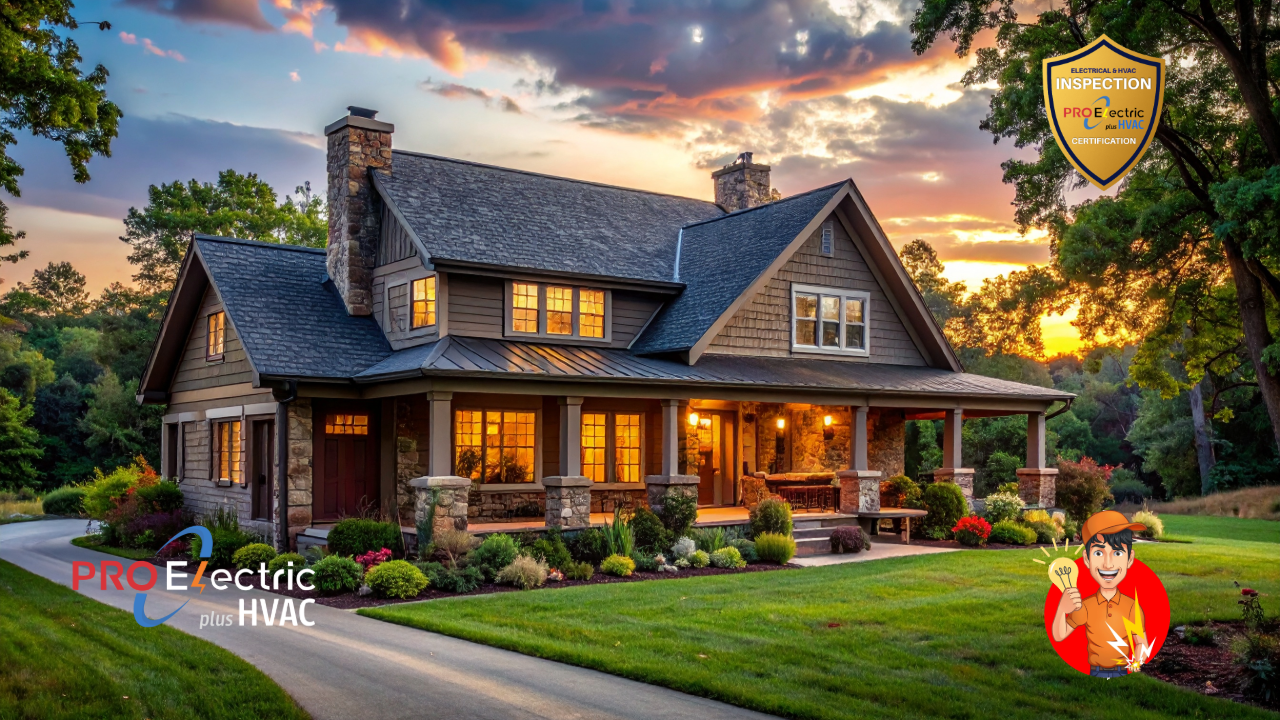
Oakton, VA homeowners spend a great deal of money on outdoor living spaces — patios, decks, pergolas, landscaping, fire features — and then watch most of that investment go dark at sunset. A professionally designed and installed outdoor lighting system does not just illuminate what is already there. It fundamentally changes when and how the property gets used, and it does several other things that most homeowners never factor in when they are deciding whether to do it.
The Four Things Outdoor Lighting Actually Does for an Oakton Property
Most conversations about outdoor lighting start and end with aesthetics — how the house looks from the street, how the garden looks at night, how the patio feels after dark. Those things are real and worth having. But they are the fourth item on the list of what a well-designed outdoor lighting system actually delivers, not the first. The first three are safety, security, and measurable property value — and each of them has a practical dollar figure attached that aesthetics alone cannot match.
Safety: The Trips, Falls, and Near-Misses That Happen in the Dark
In Oakton’s established neighborhoods — Hunter Mill Estates, Oakton Farm, Waples Mill — properties frequently feature grade changes, stone steps, root-disrupted walkways, and irregular paving. These are charming features in daylight. After dark, without adequate illumination at step transitions, pathway edges, and grade changes, they are slip-and-fall hazards that liability attorneys and insurance adjusters are very familiar with. Path lighting at grade changes and step lighting at every level transition are not decorative choices — they are the functional baseline of any responsible outdoor lighting installation.
What a Complete Oakton Outdoor Lighting Installation Addresses
- Step and grade-change lighting at every elevation transition
- Pathway lighting from the street, driveway, and garage to the front entry
- Security lighting at all entry points including rear and side doors
- Driveway and parking area illumination
- Accent and uplighting for trees, architectural features, and garden beds
- Outdoor living area and patio lighting for evening use
- Motion-activated security lighting at vulnerable perimeter locations
Security Lighting: What Deters Crime and What Does Not
Security lighting is one of the most misunderstood categories in outdoor electrical work. A bright floodlight aimed indiscriminately at a large area does not provide security — it provides glare. Glare actually works in a would-be intruder’s favor by creating bright zones that obscure what is in the surrounding shadows and making it harder for residents and neighbors to see clearly. Effective security lighting is targeted, motion-activated, and positioned to illuminate faces and entry points from the perspective of a camera or a human observer. PRO Electric plus HVAC designs security lighting in coordination with camera placement — something that requires understanding both the electrical and the surveillance geometry of a property simultaneously.
Landscape Lighting: Low-Voltage vs. Line-Voltage — the Real Difference
Landscape and decorative lighting in residential applications is typically low-voltage — operating at 12 volts through a transformer rather than at 120 volts. Low-voltage systems are less expensive to run, safer in wet and buried applications, and easier to reconfigure. Line-voltage outdoor lighting — standard 120-volt circuits — is appropriate for security floods, high-output area lighting, outdoor kitchen circuits, and any application where significant lumen output is needed. A well-designed Oakton property uses both: low-voltage for accent and pathway applications, line-voltage where output and durability matter. Mixing them on a single installation requires both low-voltage landscape design skills and licensed electrical work for the line-voltage components — a combination that not every landscape lighting company can deliver without a subcontractor involved.
Related Articles
Why Oakton Properties Specifically Benefit From Professionally Run Circuits
Many outdoor lighting projects in Oakton are started as DIY installations using plug-in transformer kits and snap-together low-voltage wire. These systems work acceptably for the first season. Over time, however, the connections oxidize, the transformer capacity proves insufficient as fixtures are added, wire runs develop ground faults from root intrusion or yard work damage, and the whole system becomes unreliable. A professionally installed system uses direct-burial rated cable at proper depth, weatherproof junction connections rated for outdoor use, a transformer with adequate capacity and circuit protection, and a layout designed for even voltage delivery across all fixture runs. The difference in reliability over five to ten years is not marginal — it is the difference between a system that works and one that requires seasonal troubleshooting.
The Resale Value Question: What the Data Shows
Multiple real estate market analyses of Northern Virginia properties have found that exterior lighting upgrades — particularly when integrated with the home’s architectural features and landscape — contribute meaningfully to appraisal value and to buyer perception during showings. In Fairfax County’s competitive market, a property that shows well at 7:00 PM on a winter evening has a measurable advantage over one that goes dark at sunset. PRO Electric plus HVAC has installed outdoor lighting systems on properties in Oakton, Vienna, Great Falls, and McLean that have since sold above asking price — a direct attribution that would overstate the contribution of any single upgrade, but a consistent pattern that Oakton realtors will recognize.
Smart Outdoor Lighting Controls: What Is Worth Adding
Modern outdoor lighting systems can integrate with smart home controllers, respond to sunset and sunrise times automatically, adjust intensity based on occupancy, and tie into security system events. For Oakton homeowners who already have a smart home system — or who are planning one — outdoor lighting control integration is worth building in from the start. The conduit and wiring choices made during the initial installation determine how easily those integrations can be added later. PRO Electric plus HVAC plans for future expansion in every outdoor lighting scope we design.
Serving Oakton, Vienna, Fairfax, and All of Fairfax County
PRO Electric plus HVAC designs and installs outdoor lighting systems that address safety, security, and livability — not just curb appeal. Let us show you what your property is capable of after dark.
Frequently Asked Questions
Why is outdoor lighting important for homes in Oakton, VA?
Outdoor lighting in Oakton homes improves safety, security, and property value while also enhancing appearance. Proper lighting reduces trip hazards, deters unwanted activity, and allows homeowners to fully use outdoor spaces after dark.
What areas of my property should be included in an outdoor lighting plan?
A complete outdoor lighting plan should include pathways, steps, driveways, entry points, patios, and landscape features. It should also include security lighting at vulnerable areas and accent lighting for trees and architectural elements.
What is the difference between low voltage and line voltage outdoor lighting?
Low voltage lighting operates at 12 volts and is typically used for pathways, landscaping, and accent lighting because it is energy efficient and safer. Line voltage lighting operates at 120 volts and is used for high output applications such as security lighting, outdoor kitchens, and large area illumination.
Does outdoor lighting increase home value in Oakton, VA?
Yes. Professionally installed outdoor lighting can improve curb appeal, extend usable outdoor living space, and enhance how a property shows at night, which can positively impact buyer perception and resale value in the Oakton real estate market.
Why should I hire a professional for outdoor lighting installation?
A professional installation ensures proper wiring, correct transformer sizing, weather resistant connections, and balanced voltage distribution across all fixtures. This results in a more reliable system that performs consistently over time without the failures common in DIY setups.
References
Illuminating Engineering Society. (2023). IES RP-33: Recommended practice for roadway and parking facility lighting. Illuminating Engineering Society.
National Fire Protection Association. (2023). NFPA 70: National Electrical Code, 2023 edition — Article 411: Landscape lighting systems. National Fire Protection Association.
National Association of Realtors. (2024). Remodeling impact report: Exterior upgrades. NAR Research Group. https://www.nar.realtor/research-and-statistics
Fairfax County Department of Land Development Services. (2024). Outdoor electrical and low-voltage installation permits. Fairfax County Government. https://www.fairfaxcounty.gov/landdevelopment