
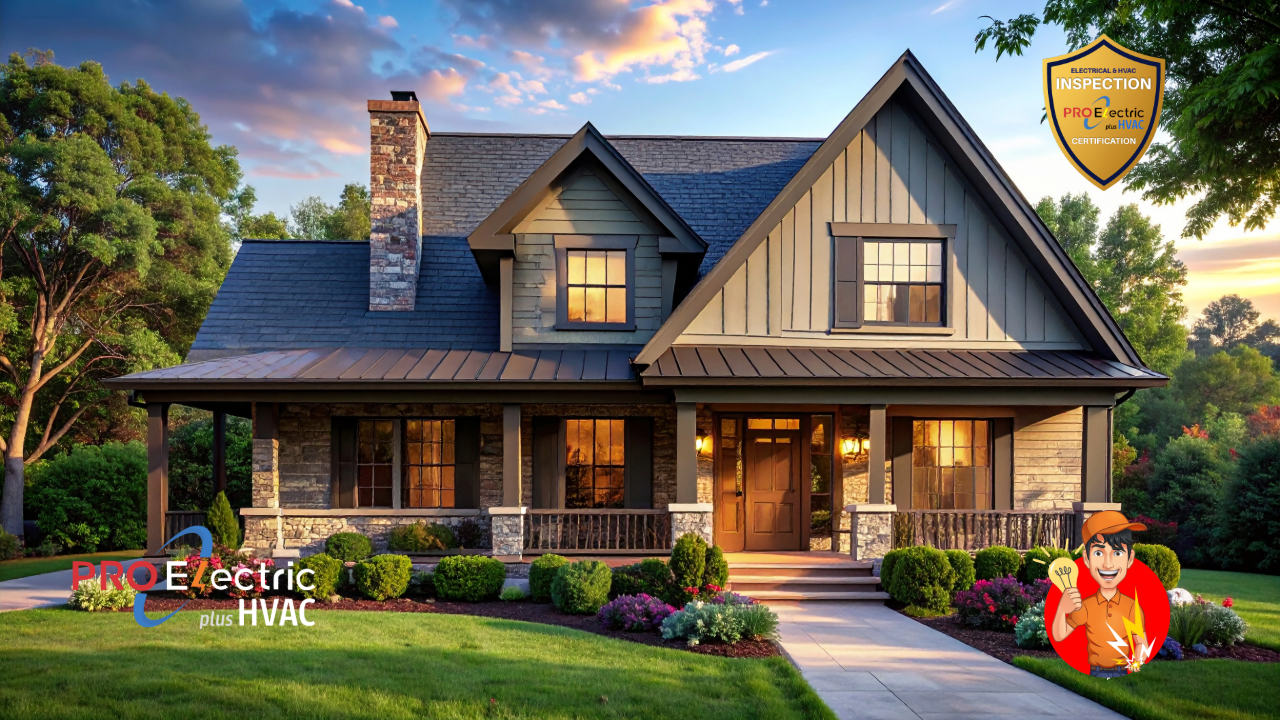
Waterford, VA is one of Virginia’s most intact historic villages — a National Historic Landmark designated for its 18th and 19th century Quaker settlement character. The properties along Main Street and the surrounding roads carry architectural and historical significance that is genuinely irreplaceable. Inside many of those properties, the electrical systems carry a different kind of history: rubber-insulated knob-and-tube conductors installed in the first decades of the 20th century that have been in service for 80 to 100 years.
What Knob-and-Tube Wiring Is and What a Century Does to It
Knob-and-tube wiring was the standard residential electrical installation method from roughly the 1880s through the early 1940s. It uses individual solid copper conductors — a hot conductor and a neutral conductor run separately rather than in a sheathed cable — supported by ceramic knobs where they pass through framing members and ceramic tubes where they pass through joists or plates. When installed and maintained correctly, knob-and-tube is not inherently dangerous. What time does to it is. The rubber insulation covering knob-and-tube conductors has a service life of approximately 25 to 30 years under normal conditions. After 80 to 100 years, that insulation has dried, hardened, and cracked at virtually every point where the wire flexes or makes contact with a surface. Bare copper conductor is now in direct contact with wood framing, insulation batts, and whatever materials prior renovations placed adjacent to it.
The Three Conditions That Make Waterford Knob-and-Tube Dangerous
Intact, unmodified knob-and-tube wiring in an uninsulated attic with no additions is at least theoretically manageable — though its age still represents a compelling reason for replacement. The conditions that transform it into an active fire risk are specific and unfortunately common in Waterford’s renovated historic properties. First: insulation packed against knob-and-tube conductors eliminates the air cooling the system depends on to dissipate heat, causing the conductors to operate at elevated temperatures under normal load. Second: splices made to add circuits over the decades, often outside of junction boxes, create connection points that deteriorate and arc. Third: overcurrent protection — fuses or breakers — that has been upsized to stop nuisance trips from aging conductors allows those conductors to carry more current than their now-degraded insulation can safely handle.
Signs That Knob-and-Tube Wiring in a Waterford Home Needs Immediate Assessment
- Original fuse panel still in service with fuses larger than the circuit requires
- Insulation added to attic or walls without documenting knob-and-tube clearance
- Visible conductor insulation that is brittle, cracked, or missing at any point
- Any modern circuit additions spliced into knob-and-tube wiring outside a junction box
- Insurance renewal requests for documentation that no active knob-and-tube is present
- Any ungrounded two-prong outlets throughout the home with no GFCI protection
Low-Impact Rewiring Methods for Waterford’s Historic Interiors
The most significant concern Waterford homeowners raise about rewiring is what it will do to the historic plaster walls, original woodwork, and irreplaceable interior finishes that define these properties. A competent electrician who has experience with historic properties approaches this work differently from a standard gut-renovation scope. Fishing new conductors through existing wall cavities using flexible fish tape and existing penetrations avoids most wall cutting. Surface-mounted conduit — in period-appropriate finishes where visible runs are unavoidable — provides a code-compliant wiring path that does not require opening walls. In spaces that are being renovated for other reasons, the rewiring runs concurrently with the renovation scope, using open walls for new circuits that would otherwise require fishing. PRO Electric plus HVAC plans the rewiring sequence in Waterford historic properties to minimize surface disruption while achieving a complete, code-compliant result.
Insurance and the Knob-and-Tube Disclosure Problem
Virginia homeowners’ insurance underwriters have become significantly more aggressive about knob-and-tube wiring disclosure in recent years. Policies written on properties with active knob-and-tube wiring frequently carry electrical coverage exclusions or require documented professional assessment confirming the wiring’s condition as a condition of coverage. Some carriers are declining to write or renew policies on Waterford properties where knob-and-tube is confirmed present without documented remediation. PRO Electric plus HVAC provides post-rewiring documentation — a written summary of the scope, the replaced conductor locations, and the permit and inspection record — that satisfies most insurer requirements for knob-and-tube remediation certification in Loudoun County.
Related Articles
The Waterford Foundation Trust and Historic Preservation Considerations
Properties within Waterford’s National Historic Landmark boundary may have exterior work governed by preservation guidelines coordinated through the Waterford Foundation. Electrical work that involves exterior penetrations, visible conduit on exterior surfaces, or changes to the service entrance configuration that affect the exterior character of the building should be reviewed against those guidelines before design is finalized. Interior electrical work — rewiring, panel replacement, circuit additions — is governed by Loudoun County’s electrical permit process and does not typically require Historic Landmark review unless exterior work is involved. PRO Electric plus HVAC coordinates the sequencing and exterior routing of any service entrance work in Waterford to minimize impact on the historic character of the property.
Serving Waterford, Purcellville, Hillsboro, and All of Western Loudoun County
PRO Electric plus HVAC rewires Waterford historic homes with methods that respect the character of these irreplaceable properties — low-impact routing, Loudoun County permits, and documentation that satisfies insurance requirements.
Schedule a Historic Home Electrical Assessment
703.225.8222
Frequently Asked Questions
Is knob and tube wiring dangerous in Waterford, VA homes?
Knob and tube wiring is not automatically dangerous just because it exists, but in many Waterford homes it has been in service for 80 to 100 years. Age, brittle insulation, improper splices, and added insulation around the wiring can turn it into a serious fire risk.
What makes old knob and tube wiring unsafe?
The biggest risks come from dried or cracked insulation, splices made outside junction boxes, insulation packed around the conductors, and overfused circuits that allow the wiring to carry more current than it can safely handle. These conditions are common in older renovated homes.
How can I tell if my Waterford home needs a knob and tube wiring assessment?
Warning signs include original fuse panels, brittle visible wire insulation, ungrounded two prong outlets, attic or wall insulation added without documenting clearance from old wiring, and insurance requests asking for confirmation that no active knob and tube wiring remains.
Can historic homes in Waterford be rewired without damaging original features?
Yes. Historic homes can often be rewired using low impact methods such as fishing new conductors through existing cavities, sequencing work during renovations, and using carefully planned surface mounted conduit where necessary. The goal is to improve safety while preserving historic character.
Can active knob and tube wiring affect homeowners insurance in Virginia?
Yes. Insurance carriers may require documentation, apply electrical coverage exclusions, or refuse to issue or renew a policy if active knob and tube wiring is present without remediation. Proper inspection, rewiring, and written documentation from a licensed electrician can help satisfy insurer requirements.
References
National Fire Protection Association. (2023). NFPA 70: National Electrical Code, 2023 edition. National Fire Protection Association.
National Trust for Historic Preservation. (2023). Electrical systems in historic buildings: Preservation brief. National Trust for Historic Preservation. https://www.savingplaces.org
Loudoun County Department of Building and Development. (2024). Electrical permits for historic properties. Loudoun County Government. https://www.loudoun.gov/building
Insurance Information Institute. (2024). Knob-and-tube wiring and homeowners insurance. III. https://www.iii.org