
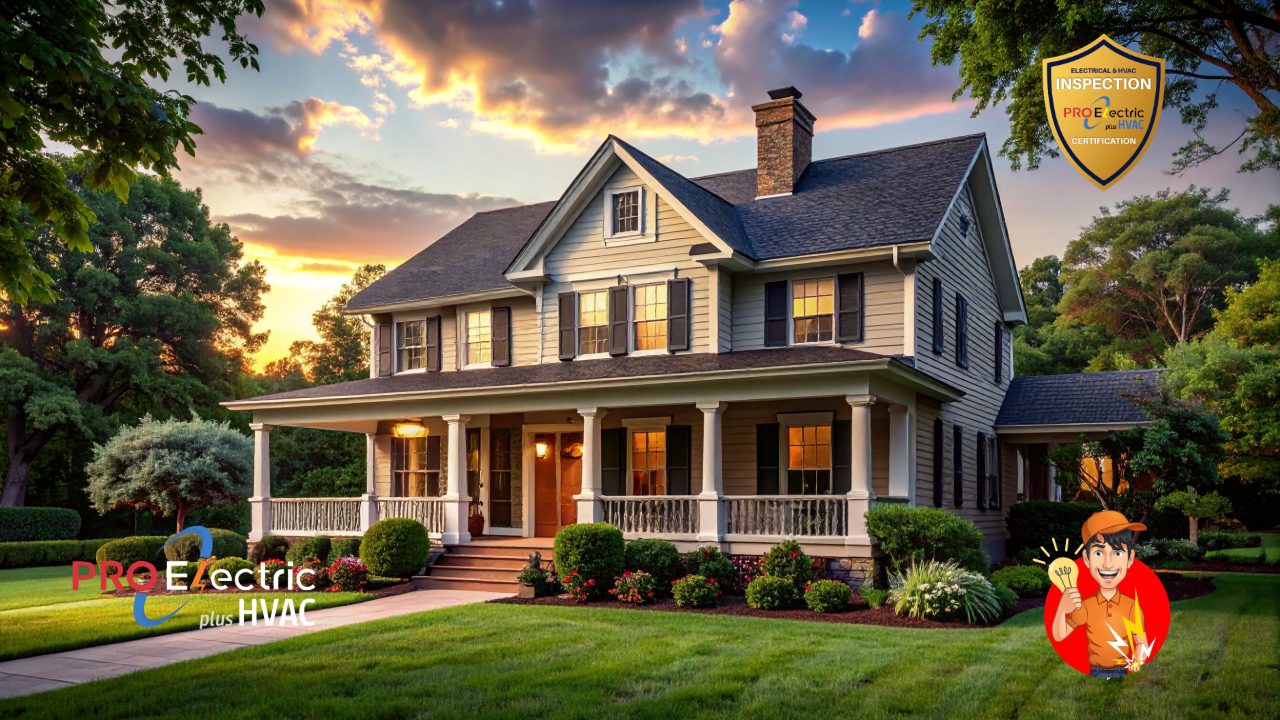
Westover, VA’s bungalows carry a specific kind of value that is difficult to quantify and impossible to fully replace the original hardwood floors, the plaster walls, the Arts and Crafts woodwork, and proportions that define a 1935 Arlington County home and that no renovation budget can fully recreate once they are damaged. Forced-air heating runs in these homes from October through April, and every hour it runs it removes moisture from the air until the indoor relative humidity reaches levels that are measurably damaging to every wood surface in the structure. This is not a cosmetic concern. It is a preservation concern that compounds with every heating season.
Why Pre-War Westover Homes Are Particularly Vulnerable to Dry Winter Air
The materials that make Westover’s pre-war bungalows architecturally significant are also the materials most sensitive to humidity fluctuation. Solid wood — as opposed to engineered wood products designed with dimensional stability in mind — expands and contracts in response to moisture content changes with a movement rate that is predictable, structural, and cumulative. A Westover bungalow whose indoor relative humidity drops to 20 percent every winter while the forced-air system runs is cycling its original hardwood floors through a seasonal shrink-expand pattern that, over 15 or 20 heating seasons, permanently changes the floor geometry. The gaps that open between boards in January close in August, but they do not close to the same dimensions they had before — the wood has moved, the finish has cracked along the gaps, and the cumulative dimensional change is now visible as a floor condition that no amount of summer humidity reverses. A whole-house humidifier that maintains 35 to 45 percent relative humidity through the heating season stops this cycle entirely from the first winter of operation.
Plaster Walls and the Humidity Damage That Is Already in Progress
Westover’s original plaster walls — applied over metal lath in a three-coat system that was standard for 1930s residential construction — are sensitive to sustained low humidity in ways that modern drywall is not. Plaster is a mineral product whose dimensional stability depends partly on maintaining the moisture content of the wood substrate it is applied over. When the wood framing behind the plaster dries significantly in response to winter forced-air heating, the plaster develops hairline cracks along framing members that are most accurately described as the structure’s response to repeated humidity cycling rather than as settlement or impact damage. A homeowner who has these cracks repaired cosmetically every two or three years without addressing the underlying humidity condition is paying for repairs that will recur as long as the humidity condition continues. A whole-house humidifier ends the cycle.
What Low Indoor Humidity Does to a Westover Pre-War Bungalow Every Winter
- Hardwood floor gapping — original solid wood contracts seasonally, widening joints that close imperfectly each summer
- Plaster cracking along framing members — structural response to wood substrate humidity cycling
- Interior door and window frame seasonal sticking and loosening — wood dimensional movement in original millwork
- Elevated household illness frequency — dry mucous membranes reduce respiratory pathogen resistance
- “Feels colder than it should” — dry air at 70°F draws heat from the body faster than humidified air at the same temperature
- Static electricity — a nuisance and a real risk for electronics and sensitive equipment
How a Whole-House Humidifier Integrates With Westover’s HVAC Systems
A whole-house humidifier in a Westover bungalow mounts on the supply or return plenum of the existing forced-air system — connected to a cold water supply line, equipped with a humidistat that maintains the target relative humidity, and operating automatically whenever the furnace runs. The humidifier adds moisture to the air moving through the system before it distributes to every room in the house — providing uniform whole-house humidity rather than the room-by-room coverage that portable units require constant attention to maintain. For Westover homes with gas furnaces or heat pumps and existing forced-air distribution, this integration is straightforward and typically completed in a single visit. For homes converting from radiator or baseboard heat that do not have forced-air distribution, a steam humidifier that operates independently of any air handler provides whole-house humidification through natural air diffusion without requiring a duct system.
Sizing the Humidifier Correctly for a Westover Home
Westover’s pre-war bungalows vary considerably in construction tightness — ranging from relatively loose original construction that infiltrates outdoor air frequently to tighter renovated homes that have been air-sealed over multiple renovation projects. The correct humidifier output — measured in gallons per day — depends on the home’s square footage, ceiling height, construction tightness, and the outdoor humidity conditions that must be compensated for during the heating season. A bypass humidifier correctly sized for a 1,600-square-foot Westover bungalow with moderate construction tightness is a different specification than one for a 2,400-square-foot home with a renovated envelope. PRO Electric plus HVAC performs the sizing calculation before any equipment is specified — because an undersized humidifier never maintains the target humidity and an oversized unit creates condensation risk on cold surfaces in tight construction.
Related Articles
The Annual Maintenance That Keeps the Humidifier Working
A whole-house humidifier installed in a Westover home and left without annual maintenance will gradually reduce its moisture output as the water panel accumulates mineral scale from Arlington County’s water supply. A humidifier that was correctly sized and delivering its rated output in its first season may be producing 40 to 50 percent of that output by its third season without a water panel replacement — enough to notice, not enough to protect the floor. PRO Electric plus HVAC includes humidifier service — water panel replacement, water supply valve inspection, and drain line check — in every annual HVAC maintenance visit for Westover properties with whole-house humidification installed. The original hardwood floors deserve that level of consistent attention.
Serving Westover, Lyon Village, Cherrydale, and All of Arlington County
PRO Electric plus HVAC installs and maintains whole-house humidifiers in Westover’s pre-war bungalows — correctly sized for each home’s construction, integrated with the existing HVAC system, and serviced annually to protect the original materials that make these homes irreplaceable.
Schedule a Humidifier Consultation
703.225.8222
References
American Society of Heating, Refrigerating and Air-Conditioning Engineers. (2022). ASHRAE Standard 55: Thermal environmental conditions for human occupancy. ASHRAE.
National Wood Flooring Association. (2023). Moisture and wood flooring: Maintaining indoor humidity for floor longevity. NWFA.
U.S. Environmental Protection Agency. (2024). Indoor air quality: Moisture and humidity control. EPA. https://www.epa.gov/indoor-air-quality-iaq/moisture-control
Centers for Disease Control and Prevention. (2024). Indoor environmental quality and respiratory health. CDC. https://www.cdc.gov/niosh/topics/indoorenv