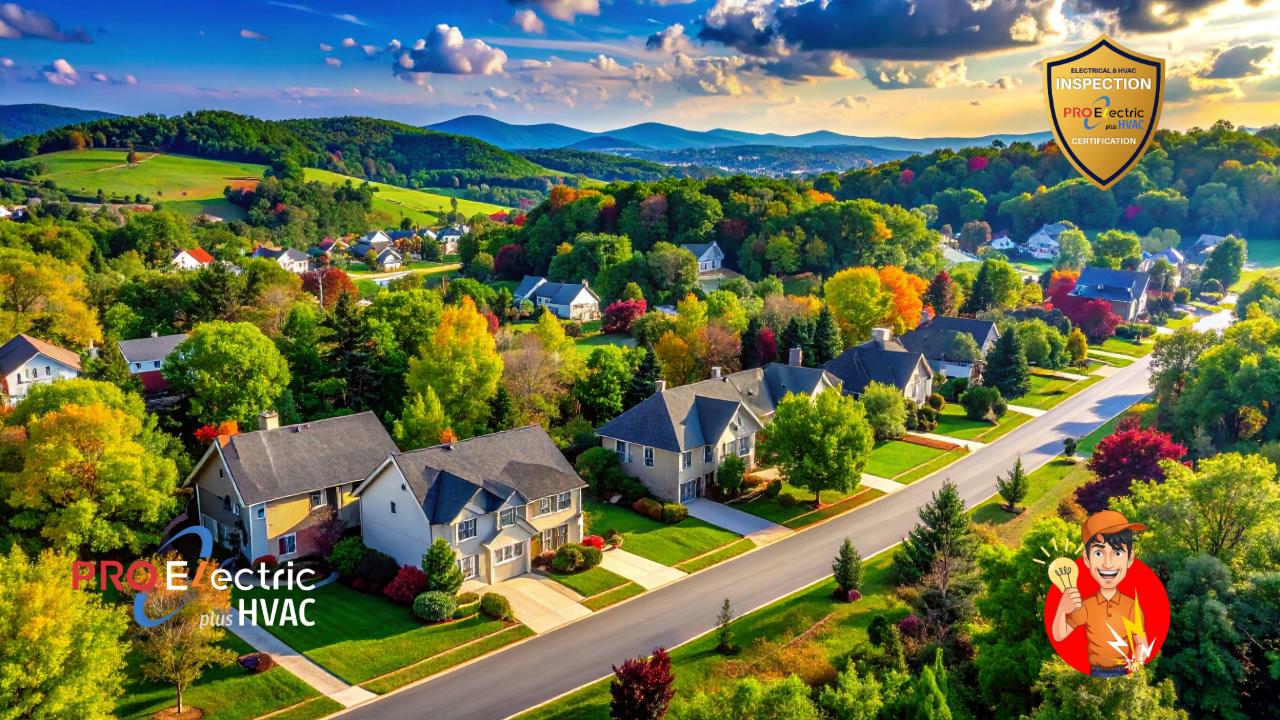
Broadlands, VA, is one of Loudoun County’s most established planned communities, a neighborhood of well-maintained single-family homes built through the late 1990s and 2000s, populated by families who have invested significantly in their properties and whose children have grown up in homes that have been running the same HVAC systems for 15 to 25 years. Those systems have been doing something every operating hour that most Broadlands families have never been told about: collecting biological contamination on the evaporator coil and distributing it through every room in the house with every air cycle, every season, every year.
The Evaporator Coil: Broadlands’ Hidden Air Quality Problem
The evaporator coil in a Broadlands home’s air handler operates under conditions conducive to biological growth, familiar to anyone who has studied hospital infection control. It is cold — between 35 and 50°F during cooling operation — and continuously wet from condensation that forms as warm, humid indoor air contacts its cold surface. Dust, organic material, and biological particles from the home’s air accumulate on the coil fins with each operating hour. Over a season, and certainly over the 15 to 25 years that most Broadlands HVAC systems have been in service, the biofilm that develops on an unmaintained coil can harbor mold, mildew, bacteria, and, in the right conditions, viruses that survive on surfaces for extended periods. Every time the HVAC system runs, it draws air across that surface and delivers the aerosolized biological content downstream — through the ductwork and into every room the system serves.
The Musty Supply Register: What Broadlands Families Are Actually Smelling
The faint, musty odor that Broadlands homeowners sometimes notice from supply registers when the HVAC system first starts up in a new season, or during high-humidity periods when the evaporator coil is working hard, is the sensory evidence of biological contamination on the coil or in the drain pan. Many homeowners attribute this odor to the ductwork, to the air filter, or to the season and stop noticing it after a few days of system operation. The coil contamination that produces the odor does not stop when the nose adapts — it continues distributing biological material into the home’s air for every hour the system runs. UV germicidal irradiation at the coil surface eliminates the source of that odor permanently, typically within the first few weeks of UV operation as the existing biofilm is deactivated and cleared.
What HVAC UV Light Systems Protect Broadlands Families Against
- Mold and mildew growth on the evaporator coil — the primary biological amplifier in a residential HVAC system
- Biofilm in the condensate drain pan and drain line that produces the musty odor at supply registers
- Airborne bacteria circulating through the duct system and into living spaces
- Airborne viruses distributed by the forced-air system during cold and flu season
- Allergens from biological sources — mold spores, dust mite material — that trigger allergy and asthma responses
- Coil fouling accumulation that reduces heat transfer efficiency and increases operating energy cost
Why Broadlands’ 15-to-25-Year-Old Systems Need UV More Than Newer Ones
A newly installed HVAC system with a clean evaporator coil starts the biological accumulation process from zero. UV light installed on that system prevents accumulation from the first day of operation — the ideal scenario. A Broadlands system that has been in service since 2002 without UV treatment has 23 years of biological accumulation on the coil. UV installation on this system does not undo the accumulation immediately — it takes weeks to months of UV exposure to deactivate the existing biofilm and several annual maintenance visits to restore the coil to near-clean condition. This is not an argument against UV installation on an older system — it is an argument for doing it now rather than after another season of biological distribution, and for including coil cleaning as part of the UV installation service to accelerate the process.
The Two-Layer Approach: UV Plus Filtration for Complete Broadlands Air Quality
UV germicidal irradiation addresses biological contaminants at the coil surface and in the airstream. It does not remove particulate matter — pollen, dust, pet dander, and fine combustion particles that trigger allergies and respiratory conditions in Broadlands families. High-efficiency air filtration in the MERV 11-13 range addresses the particulate load. Together, the two layers provide comprehensive air quality protection: filtration removes the particulate that UV cannot address, and UV deactivates the biological content that passes through even the best mechanical filter. Broadlands households with allergy sufferers, asthmatic family members, young children, or elderly occupants benefit from both layers simultaneously — and PRO Electric plus HVAC installs both as a coordinated single-visit service.
Related Articles
UV Lamp Replacement: What the Annual Maintenance Requirement Is
UV-C germicidal lamps used in residential HVAC systems degrade over time — the UV-C output at 254 nanometers declines with operating hours even while the lamp produces visible light. Most manufacturers specify an annual replacement interval for residential HVAC UV-C lamps to maintain effective germicidal output. A Broadlands home whose UV lamp has been in service for three years without replacement may be receiving 20 to 40 percent of the germicidal protection the system was designed to deliver — with no indication from the lamp’s appearance that anything has changed. PRO Electric plus HVAC replaces UV lamps at every annual maintenance visit for Broadlands properties with UV systems installed, treating it as a non-negotiable maintenance item rather than an optional add-on, because the protection the lamp provides depends entirely on maintaining its output above the germicidal threshold.
Serving Broadlands, Brambleton, Ashburn, and All of Loudoun County
PRO Electric plus HVAC installs HVAC UV germicidal irradiation systems for Broadlands families — coil sterilization and airstream treatment with annual lamp replacement included in every maintenance visit, for families who want to stop breathing what their HVAC system has been growing.
Schedule a UV Light Installation
703.225.8222
Frequently Asked Questions
Why does mold and bacteria grow inside HVAC systems in Broadlands homes?
The evaporator coil operates in a cold and constantly wet environment due to condensation. Dust and organic particles collect on the coil, creating ideal conditions for mold, mildew, and bacteria to grow and spread through the air system.
What causes the musty smell from air vents when the AC turns on?
A musty odor is typically caused by biological growth on the evaporator coil or in the drain pan. As air passes over these contaminated surfaces, it carries odors and airborne particles into the living space.
How does an HVAC UV light system improve indoor air quality?
UV-C light disrupts the DNA of microorganisms, preventing them from reproducing. Installed at the evaporator coil, it stops biological growth at the source and reduces contaminants circulating through the home’s air.
Do older HVAC systems benefit more from UV light installation?
Yes. Systems that have been running for 15 to 25 years often have significant biological buildup. UV light helps deactivate existing contamination and prevents further growth, improving air quality over time.
Does a UV light system replace the need for air filtration?
No. UV systems target biological contaminants, while filters capture dust, pollen, and other particles. A combined approach using UV light and high-efficiency filtration provides the most complete indoor air quality solution.
References
Centers for Disease Control and Prevention. (2024). Environmental infection control: UV germicidal irradiation. CDC. https://www.cdc.gov/infectioncontrol/guidelines/environmental/background/air.html
American Society of Heating, Refrigerating and Air-Conditioning Engineers. (2022). ASHRAE Standard 62.2: Ventilation and acceptable indoor air quality in residential buildings. ASHRAE.
U.S. Environmental Protection Agency. (2024). Indoor air quality: Introduction to biological pollutants. EPA. https://www.epa.gov/indoor-air-quality-iaq/biological-pollutants-impact-indoor-air-quality
National Institute for Occupational Safety and Health. (2023). UV germicidal irradiation for infection control in buildings. CDC/NIOSH. https://www.cdc.gov/niosh