
HVAC and Electrical Experts
Written by Peter
Master Electrician at PRO Electric plus HVAC, serving Fairfax, Loudoun, Arlington, and Prince William Counties. Virginia License #2705181607.
Your New Addition Deserves to Be as Comfortable as the Rest of the House.
Mini split installation for room additions across Fairfax, Loudoun, Arlington, and Prince William Counties.
Hi, I am Peter, the Master Electrician at PRO Electric plus HVAC. Building an addition is exciting right up until you realize the new room is freezing in winter and stifling in summer. It happens constantly. The addition gets framed, finished, and furnished, and then everyone discovers that the home’s central heating and cooling never planned for it. The new family room, primary suite, or office ends up with a space heater in winter and a fan in summer, which is not what anyone pictured.
The reason is simple. Your central system and its ductwork were sized and laid out for the original floor plan. Tacking a new room onto the end of that system rarely works well: the ducts do not have the extra capacity, long new runs lose performance, and pushing air to the addition often steals comfort from the rooms that used to be fine. That is why a ductless mini split has become the standard answer for additions. It heats and cools the new space on its own, with no ducts to extend and no strain on the rest of the house.
Let me walk through why additions are so hard for central air, why a mini split fits an addition so well, and how we install one as part of the project.
Why an addition is hard for central air
- The ductwork was sized for the old floor plan. Your existing ducts were designed to heat and cool the original house, not an extra room, so they usually do not have the spare capacity for an addition.
- Long new duct runs lose performance. Running a new duct branch out to an addition means a long run, and air loses temperature and pressure over distance, so the new room underperforms.
- It robs the rest of the house. Pushing conditioned air to a new room pulls it away from existing rooms, so spaces that used to be comfortable can start to feel off.
- The system may already be at its limit. If your AC or furnace is sized for the current square footage, adding more space can overload it, which leads to an addition that cannot keep up.
- Running ducts is invasive. Getting new ductwork to an addition often means opening walls, ceilings, or working through a tight attic or crawl space.
- The default fixes are stopgaps. A space heater or a window unit gets the addition through a season, but neither is comfortable, efficient, or permanent.
Why a mini split fits an addition
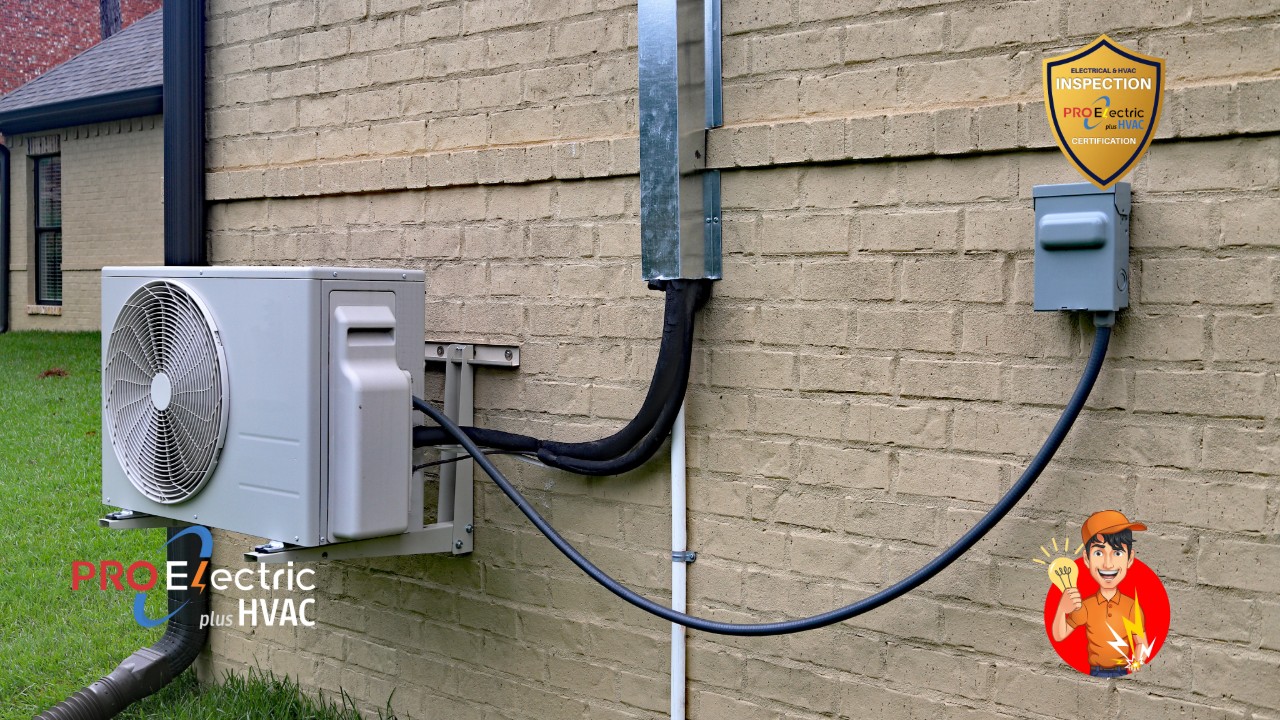
- No ducts to extend. A ductless mini split needs no ductwork at all. A small outdoor unit connects to an indoor head through a small line set, so the addition gets comfort without touching your existing system.
- Sized for the new room. The mini split is sized for the addition’s actual heating and cooling load, so it is neither overwhelmed nor oversized.
- It heats and cools. A mini split both heats and cools, so the addition is comfortable in summer and winter from one system.
- Its own thermostat. The addition gets independent control, so you can keep it at the temperature you want without fighting the rest of the house.
- It does not strain the main system. Because the mini split handles the addition on its own, your existing AC and furnace keep serving the original house exactly as before.
- Efficient and quiet. A mini split moves heat rather than making it from scratch, so it runs efficiently and quietly, with good efficiency ratings.
Plan the mini split into the addition, and get the electrical done at the same time
Here is the advice that saves the most hassle. The best time to plan comfort for an addition is while the addition is still being designed and built, not after everyone moves in and discovers the new room is uncomfortable. A mini split is easy to fold into the project: the indoor head and the line set route are planned with the framing, and the outdoor unit gets a tidy spot. Just as important, a mini split needs its own electrical, usually a dedicated circuit, and because we are licensed Master Electricians and HVAC technicians under one roof, we handle both the unit and its wiring together. That means the addition’s comfort and its power are planned as one job, with the dedicated circuit run while the walls are open, rather than two trades pointing at each other later. If you are planning the addition’s other wiring anyway, this is the moment to add the mini split circuit.
The electrical side of a mini split
A mini split is HVAC and electrical at once, which is exactly the combination we do. The outdoor unit needs its own correctly sized dedicated circuit, often a 240 volt circuit depending on the unit, run from your panel. If your panel is full or undersized, that gets addressed as part of the plan, ideally alongside the rest of the addition wiring. Doing the unit and its circuit together means one coordinated job, properly permitted and inspected, rather than a mini split that sits waiting on an electrician. If you want the full picture of where mini splits shine, our guide on why install a ductless mini split covers the range of situations.
How we help
We size and install a mini split for your addition and run its dedicated circuit, all under one roof, so the new room is comfortable in every season without extending your ductwork or straining your existing system. We plan it into the project so the unit and its wiring go in cleanly. We do this across Northern Virginia.
Frequently asked questions
Why is my new addition so hot or cold?
Most likely because your central heating and cooling was sized and ducted for the original house, not the new room. Extending ductwork to an addition often does not deliver enough capacity, loses performance over the long run, and can pull comfort away from existing rooms. That is why additions frequently end up uncomfortable, and why a ductless mini split, which serves the new space on its own, is the common fix.
Can I just extend my ductwork to the addition?
Sometimes, but it is often a poor solution. Your existing ducts and system were sized for the original square footage, so they may not have spare capacity, long new runs lose temperature and pressure, and diverting air to the addition can leave other rooms uncomfortable. Running new ducts is also invasive. A mini split avoids all of that by heating and cooling the addition independently with no ductwork.
Does a mini split heat as well as cool an addition?
Yes. A ductless mini split both heats and cools, so it keeps the addition comfortable through summer and winter from a single system. It works by moving heat rather than generating it, which makes it efficient in both modes. For an addition, that means you do not need a separate heater and cooler, the one mini split covers the new room year round.
Will a mini split for the addition affect the rest of my house?
No, that is one of its strengths. Because the mini split handles the addition on its own dedicated system, your existing central AC and furnace keep serving the original house exactly as they did before. You are not stealing capacity from other rooms or overloading the main system. The addition simply gets its own quiet, efficient comfort.
Does a mini split need its own electrical circuit?
Yes. A mini split’s outdoor unit runs on its own correctly sized dedicated circuit, often 240 volt depending on the model, run from your electrical panel. Because we are licensed Master Electricians and HVAC technicians, we install the unit and run its circuit together as one job. If your panel is full or undersized, we address that as part of the plan, ideally while the addition’s walls are still open.
When should I plan the mini split for my addition?
Ideally during the design and construction of the addition, not after. Planning it in early lets the indoor head, the line set route, and the dedicated circuit be coordinated with the framing and the rest of the addition’s wiring, which is cleaner and less expensive than retrofitting later. If the addition is already finished, a mini split can still be added, but folding it into the build is the smoothest path.
Building an addition in Northern Virginia?
We make the new room comfortable, no new ducts required.