
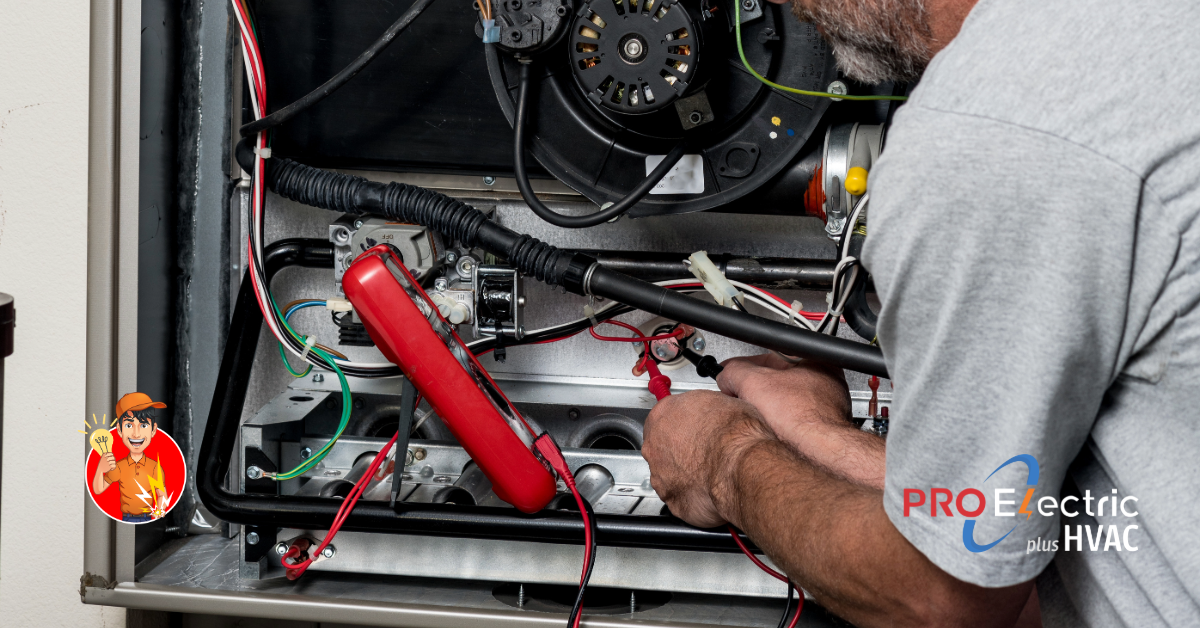
By Peter, Master Electrician | PRO Electric plus HVAC | Heating Systems
Leesburg Gas Furnace Inspections | Prevent Carbon Monoxide Leaks
Hi, I’m Peter, an HVAC Technician with PRO Electric plus HVAC.
I work on many gas furnaces in Leesburg.
The most important visit I make each year is the annual safety inspection.
It keeps your system running right and helps prevent carbon monoxide from leaking into your home.
Why Your Furnace Needs a Yearly Check
Your furnace makes heat by burning gas.
That also makes exhaust. If parts wear out or vents get blocked, exhaust can spill back inside.
Carbon monoxide is colorless and odorless.
You will not notice it until people start feeling sick.
A yearly inspection identifies problems early and helps keep your family safe.
What I Look For During an Inspection
When I check a Leesburg furnace, I go step by step so nothing gets missed.
Heat Exchanger
I inspect for cracks and corrosion. A damaged heat exchanger can let carbon monoxide mix with your indoor air.
Burners and Flame
I clean the burners and make sure the flame is steady and mostly blue. A lazy yellow flame means poor combustion.
Ignition and Flame Sensor
I test the ignitor or pilot and clean the flame sensor so the furnace lights safely every time.
Vent and Flue
I check for loose joints, rust, nests, leaves, or snow at the cap. On high-efficiency models, I confirm that the PVC has the correct slope, allowing water to drain and preventing airflow blockage.
Draft and Carbon Monoxide Testing
I measure draft at the vent and scan for carbon monoxide around the furnace and in the supply air.
Airflow and Filter
I check static pressure, blower operation, and filter condition. Good airflow protects the heat exchanger.
Safety Controls
I test limit switches, shutoff devices, and the gas valve to ensure the furnace reacts correctly in the event of an issue.
Signs You Should Call Right Away
- Soot or dark streaks near the furnace or vent pipe
- A burning or sulfur smell around the unit
- Furnace starts and stops every minute or will not stay on
- Water stains on or under PVC venting
- Carbon monoxide alarm sounding at any time
Turn the system off and call a pro if you see any of these.
What You Can Do Between Visits
- Replace the filter every 1 to 3 months
- Keep the furnace area clear of boxes, paint, and rags
- Check the outdoor vent cap so it is not covered by leaves or snow
- Test carbon monoxide detectors monthly and change batteries as needed
- Do not close supply vents in rooms. Blocking airflow can overheat the furnace
A Local Note for Leesburg Homes
Leesburg has a mix of older houses and newer developments. In older homes, I often find metal flues with loose joints or masonry chimneys with debris.
Newer high-efficiency furnaces utilize PVC vents that can sag if not properly supported.
Both issues are easy to fix when they are caught early.
Winter winds and heavy snow can also cover sidewall vent caps here.
A quick look after storms helps a lot.
Final Thought
Safe heat is not guesswork.
One yearly inspection can prevent carbon monoxide leaks, reduce the need for repairs, and keep your furnace running efficiently all winter.
If you live in Leesburg and want a careful safety check, call PRO Electric plus HVAC at 703-225-8222 and ask for Peter.
I will inspect your furnace from top to bottom to ensure your home stays warm and safe.
📞 Call 703-225-822 now or book online while you’re thinking about it.