
Certified Master Electricians
Written by Peter
Master Electrician at PRO Electric plus HVAC, serving Fairfax, Loudoun, Arlington, and Prince William Counties. Virginia License #2705181607.
A Light Switch That Quit Is Usually a Quick Fix.
Switch and wiring repair across Fairfax, Loudoun, Arlington, and Prince William Counties.
Hi, I am Peter, the Master Electrician at PRO Electric plus HVAC. A light switch that stops working is a common call, and like a dead outlet, it usually comes down to a short list of causes you can check in order. Sometimes it is not even the switch. Let me walk you through where to look, and where the line is between a simple check and a job for an electrician.
Most switch problems fall into a few buckets: the bulb, the switch itself, the power feeding it, or the wiring behind it. Working through them in order usually finds the answer quickly.
Why a light switch stops working
- The bulb, not the switch. It sounds obvious, but a burned out bulb is the first thing to rule out, especially if only one fixture is affected.
- A worn out switch. Switches have moving parts and do wear out. A switch that feels loose, does nothing, or used to be intermittent has often failed.
- A tripped breaker. If the switch and other things nearby are all dead, check the panel for a tripped breaker, which ties into a breaker that keeps tripping.
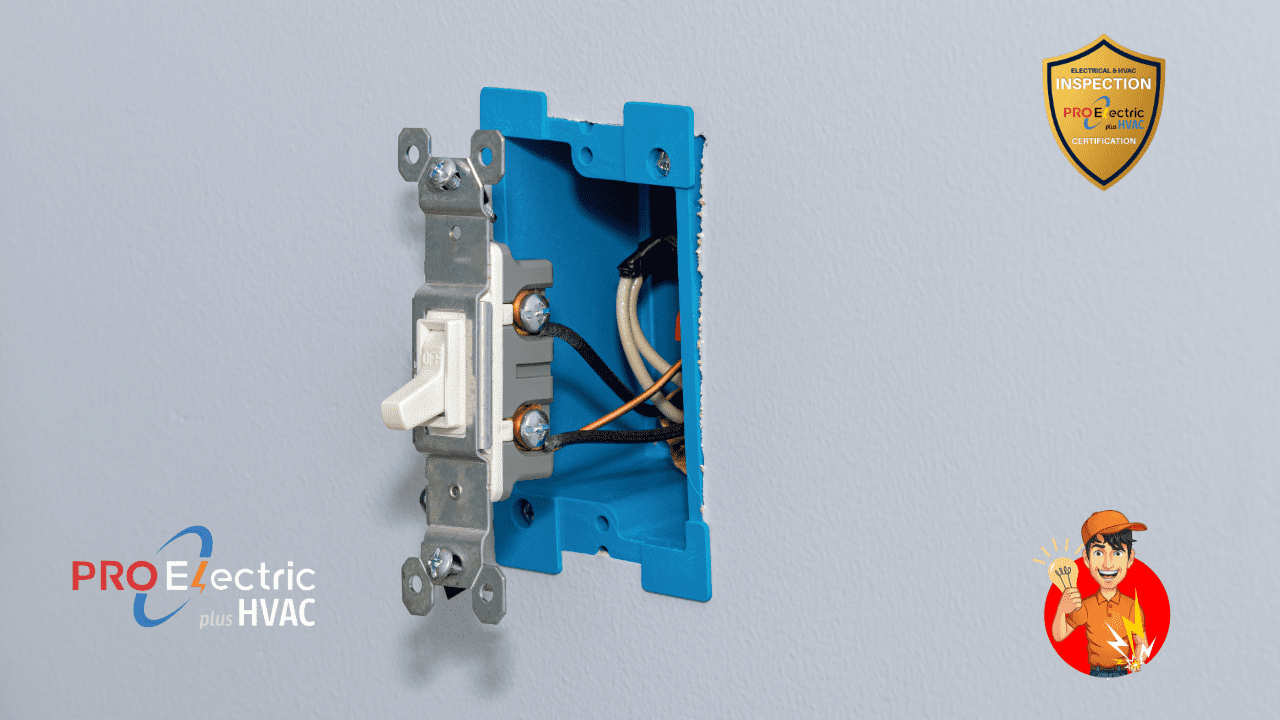
- A loose wire. A wire that has worked loose behind the switch is a frequent cause, and it can also make a switch warm, which is worth attention.
- A three way switch out of sync. If a light is controlled by two switches, a fault in one can make the pair behave oddly.
A warm or buzzing switch is a reason to stop
A switch that does nothing is usually harmless to poke at, but a switch that feels warm to the touch, buzzes, or has any scorch marks is different. That points to a loose connection or a switch failing under load, which is a heat and fire concern. Turn that circuit off at the breaker and have it looked at rather than continuing to use it.
What you can safely check
- Try a new bulb. Rule out the simplest cause first.
- Check the breaker. Look for a tripped breaker and reset it once.
- See what else is out. If nearby outlets or lights are also dead, the problem is upstream of the switch, not the switch itself, which overlaps how you trace a dead outlet.
When to call
If the bulb and breaker check out and the switch still does nothing, the switch or its wiring needs attention. The same is true for any switch that is warm, buzzing, or scorched, or a light that flickers along with the switch trouble. Replacing a switch and making the connections correctly is straightforward for an electrician and removes the guesswork.
How we help
We track the problem to its source, replace worn switches, tighten or repair loose connections, and sort out three way switches that are misbehaving. We handle switch and wiring repair across Northern Virginia as part of our outlet and switch service.
Frequently asked questions
Why did my light switch stop working?
Common reasons are a burned out bulb, a worn out switch, a tripped breaker, or a loose wire behind the switch. If a light is controlled by two switches, a fault in one can also cause trouble. Checking the bulb and the breaker first rules out the simplest causes.
How do I know if my light switch is bad?
If the bulb is good, the breaker is on, and the switch still does nothing, the switch itself is a likely culprit, especially if it feels loose or used to work intermittently. A switch that is warm, buzzing, or scorched has likely failed and should be turned off at the breaker and replaced.
Why is my light switch warm?
A warm switch usually means a loose connection or a switch failing under load, both of which generate heat. That is a fire concern, not just a nuisance. Turn the circuit off at the breaker and have the switch and its connections inspected before using it again.
Can a bad light switch be a fire hazard?
It can. A switch with a loose connection or worn contacts can overheat, and warmth, buzzing, or scorch marks are warning signs. A failing switch is inexpensive to replace, and doing so before it overheats removes the risk. Persistent warmth at a switch should not be ignored.
Is it the switch or the wiring?
If only that one switch is affected and the bulb and breaker are fine, the switch is the likely cause. If nearby outlets and lights are also dead, the problem is more likely upstream in the wiring or the breaker. An electrician can confirm which it is quickly and safely.
Light switch that quit on you?
Switch and wiring repair across Northern Virginia.