
🔗 A breaker that trips repeatedly and will not reset, especially with a burning smell or heat on the panel cover, is an emergency. Leave it off and call our 24/7 emergency electrical service at 703.225.8222.
Tired of Resetting the Breaker? Here’s Why It Won’t Stay On
As the owner of PRO Electric plus HVAC here in Northern Virginia, I’ve seen my fair share of frustrated homeowners dealing with constantly tripping circuit breakers. It’s not just an annoyance — it’s your electrical system trying to tell you something. In this post, I’ll explain why residential circuit breakers trip, covering all the common mechanical, electrical, and component-related reasons. I’ll also talk about how everyday appliances (from your hair dryer to your EV charger) can contribute to breaker trips, and why calling a professional like me to diagnose and fix the issue is often the safest move.
Circuit breakers are vital safety devices: they shut off power when too much current flows through a circuit, preventing overheated wires and potential fires. When a breaker “trips” (shuts off), it’s usually for one of a few reasons — an overload, a short circuit, or a ground fault are the big three. However, underlying those are issues like aging wiring, loose connections, or faulty devices. Let’s break down each of these categories and see how standard home systems and appliances play a role.
Overloaded Circuits — Too Many Devices Drawing Power
Overloads are the most common cause of a tripped breaker. An overload means you have more electrical demand on a circuit than it’s designed to handle. Think of a typical 15-amp household circuit — it can handle about 1800 watts (and a 20-amp circuit about 2400 watts) before the breaker is at its limit. A typical hair dryer uses 1500–1800W, and many space heaters use around 1500W as well. That means just running a hair dryer and a space heater on the same 15A circuit can overload it and cause a trip.
High-power devices that often overload residential circuits include:
Space Heaters and Portable AC Units:
These plug-in climate control devices draw a lot of current (usually up to 1500W each). If you have a space heater or portable AC running, avoid running other big appliances on the same circuit at the same time. I often get calls in winter from folks who cranked up a space heater and blew a breaker — the heater wasn’t faulty, it was just too much for the circuit on top of everything else running.
Hair Dryers, Curling Irons, and Clothes Irons:
Bathroom and vanity appliances are notorious for this. A hair dryer alone uses about 12–15 amps. In older homes, bathrooms sometimes share circuits with other rooms, so using a hair blower in the bathroom could trip a kitchen breaker if they’re inadvertently linked — I’ve seen it happen.
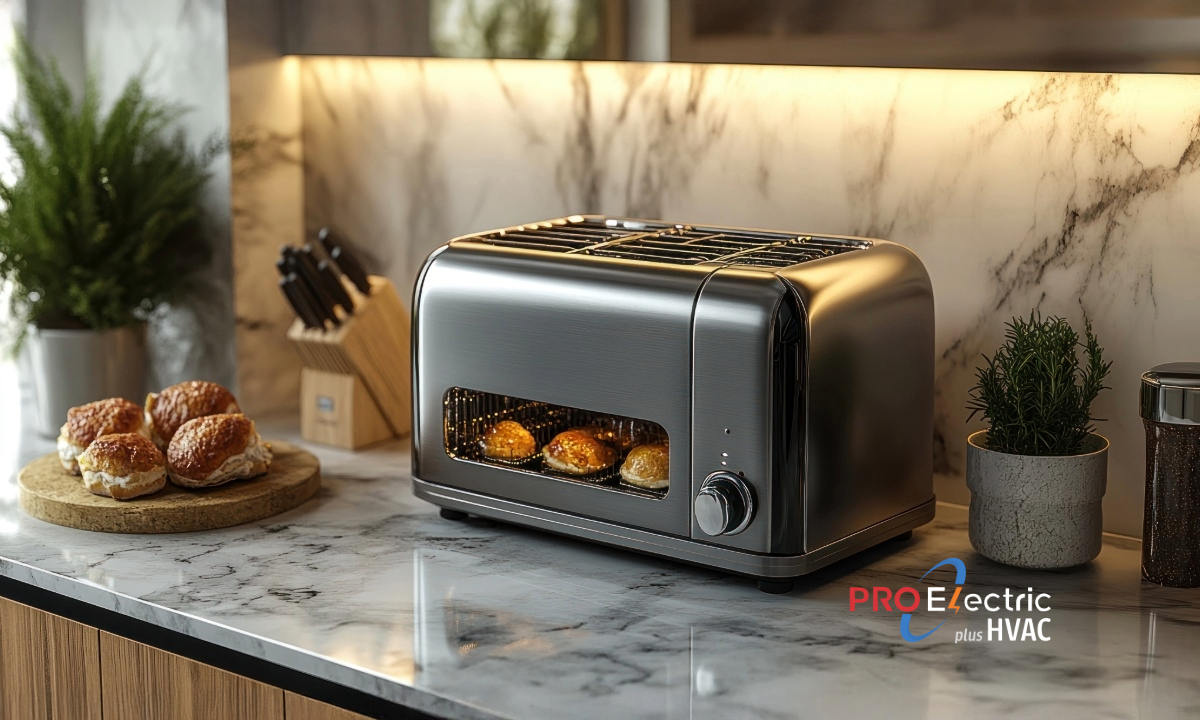
Kitchen Appliances (Toasters, Air Fryers, Microwaves, etc.):
A toaster or air fryer can draw 1200–1500W; a coffee maker or microwave is similar. If you’re making breakfast and have the toaster oven, coffee machine, and an air fryer all going at once, don’t be surprised when the breaker pops.
Home EV Chargers:
Charging an EV requires a lot of power over a sustained time. Even a correctly wired Level 2 charger (240V) can trip the breaker if your electrical panel’s capacity is insufficient for the added load. I’ve helped Northern Virginia homeowners upgrade their panels or add dedicated circuits for EV chargers because their old setup couldn’t keep up — the frequent breaker tripping was a clear warning sign.
Short Circuits, Ground Faults, and Other Causes
A short circuit occurs when a “hot” wire carrying current accidentally touches a neutral wire or a ground, causing an immediate surge of current. A ground fault is a specific type of short where electrical current strays from the intended circuit path and flows into the ground. Old or outdated wiring, loose connections, and failing appliances can also trigger breaker trips in ways that aren’t always obvious. Electric water heaters, furnaces, sump pumps, EV chargers, and even cheap space heaters can all cause trips when they develop internal faults.
Sometimes the issue isn’t a single circuit or device — it’s your overall electrical panel capacity. If your household’s demand exceeds what the panel is rated for, you might find multiple breakers tripping or even the main breaker cutting out. Frequent breaker tripping after adding an EV charger is a red flag that your electrical system may be at capacity and needs an upgrade.
Don’t Ignore a Tripping Breaker — Get Professional Help
By now you can see that a tripping circuit breaker is your friend — it’s telling you something is wrong, and it’s preventing a possible disaster like an electrical fire. It’s critically important not to ignore the warning signs. If your breaker trips repeatedly, you should never just keep flipping it back on without investigating why.
As a licensed electrician who’s been serving Northern Virginia for years, I’ve seen every cause under the sun for tripped breakers. The key takeaway is that electrical diagnosis is best left to professionals. My team and I have the tools and expertise to quickly pinpoint whether it’s an overload issue, a wiring fault, or an appliance acting up.
So if you’re constantly marching to the basement to reset breakers, give me a call at PRO Electric plus HVAC. Let me put my experience to work for you. Remember, a circuit breaker tripping is never “normal”; it’s a sign. Listen to it, and let an expert address the underlying issue.
(If you’re in Northern Virginia and need help with a tripping breaker or any electrical concern, reach out to PRO Electric plus HVAC. I’m Peter, and my team is always here to provide prompt, professional service.)
🔗 Related reading: A tripping breaker is one of the clearest warning signs your home’s electrical system is in trouble. For a complete guide to every signal your Northern Virginia home may be sending, read: full guide to signs your Northern Virginia electrical system is failing.