Certified Master Electricians
Written by Peter
Master Electrician at PRO Electric plus HVAC, serving Fairfax, Loudoun, Arlington, and Prince William Counties. Virginia License #2705181607.
Yes, Your Home EV Charger Almost Always Needs a Permit. Here Is Why That Is Good.
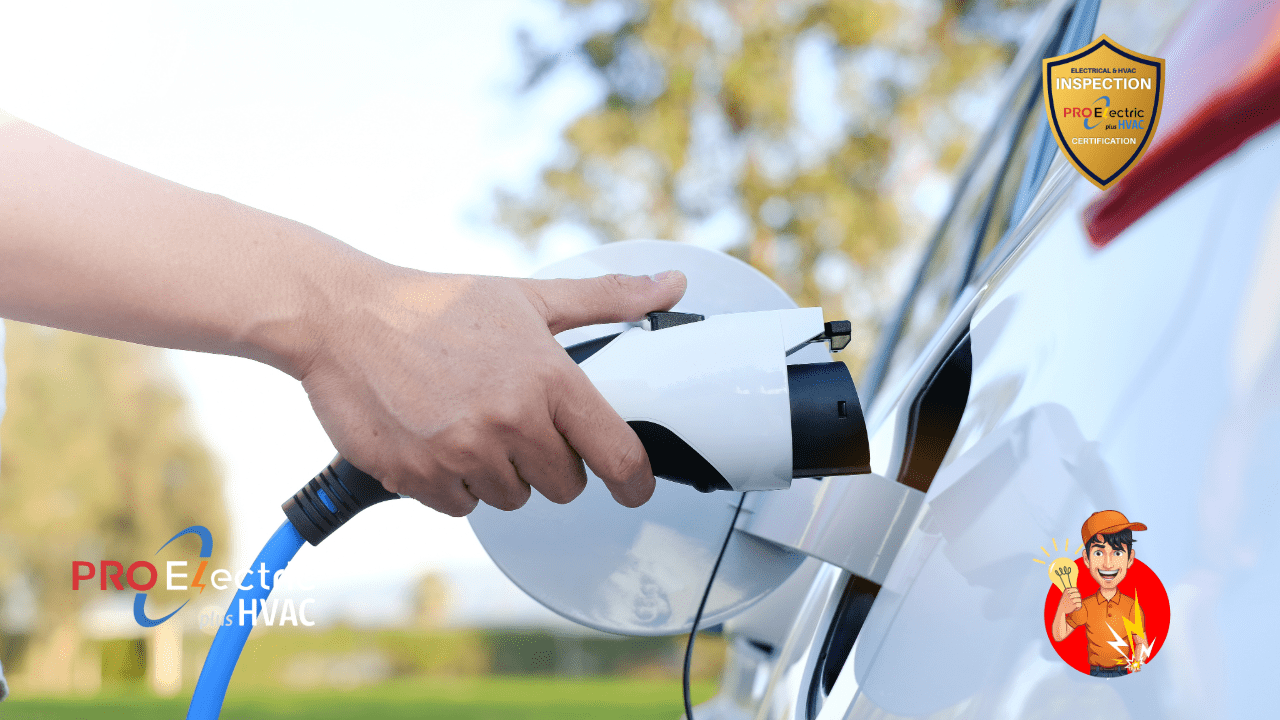
Permitted EV charger installation across Fairfax, Loudoun, Arlington, and Prince William Counties.
Hi, I am Peter, the Master Electrician at PRO Electric plus HVAC. When people install a Level 2 EV charger, one of the first questions is whether they need a permit. In Northern Virginia, the answer is almost always yes, and the permit is there to protect you. Let me explain how it works.
An EV charger adds a large dedicated circuit to your home, and that kind of work is exactly what permits and inspections exist for.
Why an EV charger needs a permit
A Level 2 charger runs on a dedicated 240 volt circuit, the same class of work as adding a major appliance circuit. In Fairfax County and across Northern Virginia, that requires an electrical permit and an inspection. It is not busywork. The charger draws significant continuous power, and the permit confirms the circuit, the breaker, and the connection were done right.
What the permit protects
- Correct sizing. The inspection confirms the wire, breaker, and circuit are sized for the charger continuous load.
- Safe installation. A county inspector independently verifies the work, so you are not relying on the installer word alone.
- Insurance and resale. Permitted work creates a record that protects you with your insurer and when you sell.
- No overloaded panel. The process makes sure your panel can actually carry the new load, which I cover in whether your panel can handle an EV charger.
What happens if you skip it
An unpermitted EV charger install can cause problems later with your insurance, with disclosures when you sell, and with safety if it was not done to code. A big continuous load on an undersized or poorly connected circuit is a real hazard. Doing it permitted the first time is the cheaper and safer path.
How we handle it
We pull the permit, install the charger to code, and schedule the inspection, so you end up with a safe charger and the paperwork to prove it. It is a standard part of our EV charger installation. If you are still choosing a charger or a charging level, here is Level 1 vs Level 2, and the EV charger tool can help you plan.
Frequently asked questions
Do I need a permit to install an EV charger?
Almost always, yes. A Level 2 charger runs on a dedicated 240 volt circuit, and in Fairfax County and across Northern Virginia that work requires an electrical permit and inspection. The permit confirms the circuit, breaker, and connection were installed correctly for the charger continuous load.
Why does an EV charger need a permit?
Because it adds a large dedicated circuit that draws significant continuous power. The permit and inspection confirm the wire and breaker are sized correctly, the work is safe, and your panel can carry the load. It protects you on safety, insurance, and resale.
What happens if I install an EV charger without a permit?
An unpermitted install can cause problems with your insurance, with disclosures when you sell, and with safety if it was not done to code. A large continuous load on an undersized or poorly connected circuit is a genuine hazard, so permitted work is the safer and cheaper path.
Who pulls the permit for an EV charger?
Your licensed electrician does. We pull the permit, install the charger to code, and schedule the county inspection, so you end up with a safe install and the documentation to prove it, with no paperwork burden on you.
Does installing an EV charger require an inspection?
Yes. Along with the permit, the installation is inspected to confirm the circuit, breaker, and connection meet code and that your panel can support the load. The inspection is what turns a finished install into a verified, documented one.
Ready to add a home EV charger the right way?
Permitted EV charger installation across Northern Virginia.