
Certified Master Electricians
Written by Peter
Master Electrician at PRO Electric plus HVAC, serving Fairfax, Loudoun, Arlington, and Prince William Counties. Virginia License #2705181607.
Some Electrical Work Is Fine to DIY. Some Is Not. Here Is the Line.
Outlet, switch, and wiring work across Fairfax, Loudoun, Arlington, and Prince William Counties.
Hi, I am Peter, the Master Electrician at PRO Electric plus HVAC. I am not going to tell you that every little electrical task needs a professional, because that would not be honest. Some jobs are fine for a careful homeowner. Others carry a real risk of shock, fire, or a hidden problem you will not see until it causes trouble. Let me give you a straight guide to where that line is, so you know when to grab a screwdriver and when to call.
The honest rule of thumb is this. Swapping a like for like device, with the power off and the work verified, is within reach for many homeowners. Anything that involves the panel, new wiring, a circuit you are not sure about, or older wiring you do not understand is where the risk climbs and a licensed electrician is the right call.
Often within reach for a careful homeowner
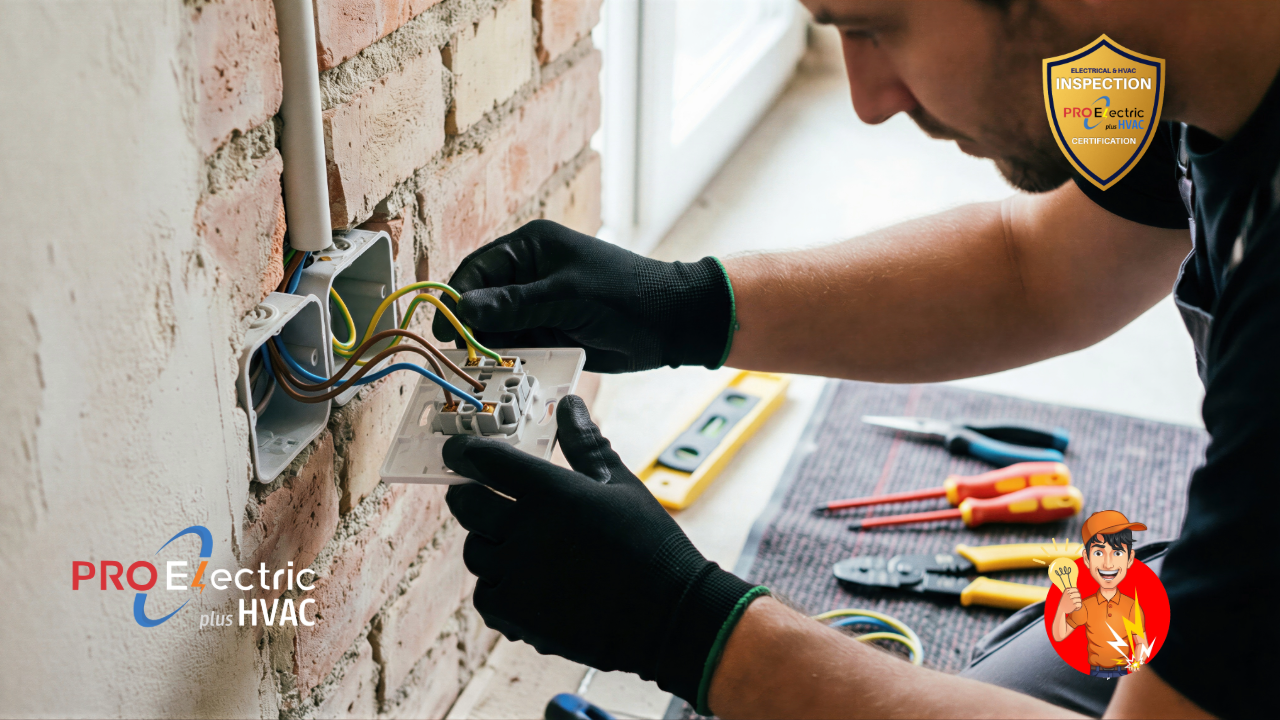
- Replacing a light fixture or a standard switch. A like for like swap with the breaker off and the wires clearly matched is a common homeowner job.
- Swapping a standard outlet for the same type. Again, like for like, power off, and only if the wiring behind it is modern and in good shape.
- Resetting a tripped breaker or a GFCI. This is routine and expected. The device is built for it.
- Changing a bulb or a simple plug in timer. Everyday tasks with no wiring involved.
Call a licensed electrician for
- Anything inside the panel. Adding or changing breakers, or any work in the breaker box, carries serious shock risk and should be left to a pro. That includes a panel or service upgrade.
- New circuits or new wiring. Running a new circuit, adding outlets where there were none, or a dedicated circuit for an appliance involves load calculations and permits.
- Older or unfamiliar wiring. If you open a box and find cloth wiring, no ground, or something you do not recognize, stop. This is common in older homes and needs an expert eye.
- Anything that is not behaving normally. A warm outlet, scorching, a spark, a burning smell, or an outlet that stopped working for no clear reason points to a fault that needs diagnosis, not just a new device.
Two things that catch people out: permits and what is hidden
Even when a task looks simple, two things trip up homeowners. First, permits. Much electrical work legally requires a permit and inspection, and skipping that can cause problems at resale, with insurance, and with safety. Second, what you cannot see. A new outlet does not fix a bad connection upstream or an overloaded circuit, and wiring it wrong, with a hot and neutral reversed or a missing ground, leaves a hazard hidden in the wall. If you are not fully sure, the safe and often cheaper path in the long run is to call. When in doubt, do not guess with electricity.
How we help
We handle the work that should not be a gamble, from a single outlet or switch through new circuits, panel work, and outlet and switch installation, all done to code and permitted where required. If you started a project and hit something you did not expect, we are glad to step in. We serve homeowners across Northern Virginia.
Frequently asked questions
Can I replace an outlet myself or do I need an electrician?
Replacing a standard outlet with the same type can be within reach for a careful homeowner, but only with the breaker off, the work verified, and modern wiring in good shape behind it. If you find older wiring, no ground, scorching, or anything you do not understand, stop and call a licensed electrician.
What electrical work can a homeowner legally do?
Rules vary by locality, but many simple like for like swaps, such as a light fixture, a standard switch, or an outlet, are commonly done by homeowners. Work in the panel, new circuits, and new wiring usually require a licensed electrician and a permit. Check your local requirements, since much electrical work legally needs a permit and inspection.
When should I call an electrician instead of doing it myself?
Call a professional for anything inside the panel, any new circuit or new wiring, older or unfamiliar wiring, or any sign of a fault like a warm outlet, a spark, a burning smell, or an outlet that quit for no clear reason. Those situations carry real shock and fire risk and need proper diagnosis.
Do I need a permit to replace an outlet?
Often, yes, depending on your locality and the scope of the work. Much electrical work legally requires a permit and inspection, and skipping it can cause issues at resale, with insurance, and with safety. A simple like for like swap may be treated differently than new wiring, so check your local rules before starting.
Is it safe to do my own electrical work?
It depends on the task. Simple like for like swaps with the power off can be safe for a careful homeowner, but panel work, new wiring, and older systems carry serious shock and fire risk. The hidden dangers, like a reversed connection or a missing ground, are what make many jobs better left to a licensed electrician.
Hit something you did not expect?
Outlet, switch, and wiring work across Northern Virginia.